Crypto
10 Best UK Crypto Exchanges in 2026

Since crypto has been recognized by the FCA as an asset, the fear around investing in crypto has since softened. With so many options available on the market, finding the best crypto exchange in the UK that is secure and easy to use is not as easy as it seems. Consider whether the exchange has SAFU, which is a formidable double-encrypted security system, first. To help make your decision-making easier and faster, we asked around, researched, and tested dozens of exchanges first-hand, and narrowed your choices down to the top 10 most reliable platforms.
When you read through, you will learn more about our recommendations, and we will also show you which key areas to focus your research on when choosing the best place to buy crypto in the UK. Even though there are some of the best crypto tax software to make taxation easy, we will discuss crypto taxation in the UK, walk you through the process of joining a crypto exchange, and how to get your account ready for trading.
Top UK Crypto Exchanges for 2026
1: Coinbase
Coinbase ranks as one of the top exchanges for UK investors, recognized for its beginner-friendly interface and strong regulatory compliance. It remains an ideal entry point, though UK users looking for institutional custody or lower fees often use it alongside other leading platforms.
Why UK Investors Choose Coinbase
- FCA Compliance: Coinbase is authorized by the Financial Conduct Authority (FCA) to operate as an Electronic Money Institution (EMI) and provide crypto asset services.
- User-Friendly UI: The platform features an intuitive interface that makes buying, selling, and managing a crypto portfolio highly accessible.
- Advanced Trading: For more experienced users, Coinbase Advanced offers deep liquidity and standard maker/taker fees starting around 0.40%.
2: MEXC
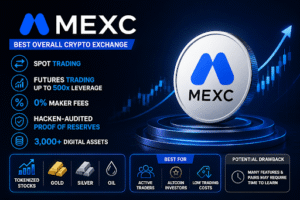
MEXC is one of the top platforms available for altcoin traders in the UK. While it stands out for its massive selection of early-stage coins and low fees, it operates as an offshore exchange and is not officially registered with the UK’s Financial Conduct Authority (FCA).
MEXC in the UK
- Asset Selection: Features over 650 cryptocurrencies, making it a premier destination for altcoin and memecoin trading.
- Fee Structure: Offers highly competitive maker and taker fees, generally around 0.05%.
- Regulation Notice: In response to strict UK financial regulations, UK residents cannot access crypto derivatives or futures trading on MEXC. The platform lacks FCA authorization.
- Fiat Support: Does not directly support GBP deposits, meaning you will need to fund your account via crypto transfers or use P2P options.
3: Bitunix

Bitunix is widely ranked among the top crypto exchanges, celebrated specifically as the best derivatives trading platform in the UK for 2026. It stands out for its high-performance trading engine, deep liquidity, and a professional-grade interface without requiring mandatory KYC for basic daily trading.
Why Bitunix Tops the List for 2026
- Derivatives Excellence: Offers over 500 spot assets and 400+ futures pairs with up to 200x leverage.
- Deep Liquidity: High-speed, professional-grade order book visibility that minimizes slippage during volatile periods.
- Flexible Trading Options: Features integrated copy trading, dual-investment tools, and high-security standards powered by Proof of Reserves (POR).
4: Zoomex
Zoomex is an all-in-one cryptocurrency exchange with 3 million users globally. It was founded in 2021 to create a platform that blends simplicity, ease of use, and speed. A specific headquarters is not listed, but Zoomex has partnered with the MoneyGram Haas F1 Team.
Zoomex is a tempting alternative to mainstream platforms if you’re looking for the best crypto exchange for trading. Accounts can be funded with fiat or cryptocurrency, 532 assets can be traded on the spot market, and up to 1000x futures leverage is available. Having multiple trading options is a significant advantage of Zoomex. A Decentralized Exchange (DEX) for trading directly from your wallet and a Peer-to-Peer (P2P) marketplace for trading directly with other users provide the platform’s typical centralized trading experience.
5: Binance
Binance has established itself as the world’s leading cryptocurrency exchange ever since it launched in 2017. Handling billions of transactions daily, it has built a massive user base and offers an unparalleled selection of features. Although Binance operates globally, its US services are restricted to a separate subsidiary.
The platform supports trading for more than 350 cryptocurrencies and thousands of pairs. Spot trading, stake trading, futures trading with leverage of up to x125, and margin trading are all features of Binance. P2P transactions, automated bot trading, and copy trading are also accessible to users. Fiat deposits are available in over 100 currencies via multiple payment methods. Binance uses a tiered fee system, reducing costs for high-volume traders and offering extra savings for payments made in BNB tokens.
6: Kucoin
financial stock market graph on technology abstract background
KuCoin is consistently ranked among the top global centralized exchanges for altcoin variety and market liquidity. While highly favored by UK investors for niche tokens, spot trading, and competitive base fees (around 0.1%), it faces regulatory complexities in the UK.
7: Kraken

Launched in 2013, Kraken is a US-based crypto exchange known for its robust security measures and consistent performance. With billions in daily trading volumes, it’s a go-to choice for both novice and experienced traders worldwide.
Kraken offers trading options like spot trading, margin trading with leverage up to x5 and futures trading with leverage up to x50, and it supports more than 300 different cryptocurrencies. Additionally, the platform provides staking opportunities for individuals seeking a passive income. Deposits are supported in six major fiat currencies via multiple payment methods. The transparent fee structure of Kraken gives lower rates to traders who trade a lot.
8: Phemex
Phemex is a Singapore-based cryptocurrency exchange that launched in 2019. Known for its comprehensive offerings, it serves traders globally but excludes the US due to regulatory restrictions.
Spot trading, futures with leverage of up to x100, and staking are among the services offered by the platform, which supports more than 250 cryptocurrencies. Credit cards are one of the available options for making deposits in fiat currency.
9: CEX.IO

Founded in 2013 and based in London, CEX.IO is one of the earliest cryptocurrency exchanges. It operates globally and provides a safe platform for spot, margin, and stake trading. The platform supports over 180 cryptocurrencies and allows users to deposit fiat in USD, EUR, and GBP. Payment methods include credit cards, bank transfers, PayPal, and Skrill. Due to its tiered fee structure, CEX.IO is a cost-effective option for active users with lower fees for high-volume traders.
10: Uniswap V2
Uniswap V2 is a decentralized exchange (DEX) operating on the Ethereum blockchain, launched in May 2020. Direct ERC-20 to ERC-20 trading pairs, automated market maker (AMM) functionality, and flash swaps were among the significant enhancements it made over its predecessor. Uniswap V2 allows anyone to provide liquidity to trading pools and earn a share of transaction fees, making it a popular choice for DeFi users.
The platform stands out for its transparency, security, and the fact that it can handle a lot of trading pairs without having to rely on order books. But Uniswap V2 is subject to high Ethereum gas fees, especially during periods of network congestion, which can make trading expensive for smaller transactions. Some users also experience failed swaps due to low liquidity in certain pools, and the interface may be daunting for complete beginners.


Web3 is entering a new phase in 2026. The industry is moving beyond the hype surrounding cryptocurrencies and NFTs and increasingly focusing on practical applications of blockchain technology.
Financial institutions, technology companies and developers are exploring blockchain for payments, tokenised assets, digital identity, decentralised finance and AI-powered applications. The World Economic Forum describes 2026 as an important year for digital assets, with tokenisation and enterprise blockchain adoption becoming increasingly significant.
So, what are the biggest Web3 trends to watch in 2026?
1. Real-World Asset Tokenisation
One of the biggest Web3 trends in 2026 is real-world asset (RWA) tokenisation.
Tokenisation means representing an asset—such as a bond, fund, property or other financial instrument—as a blockchain-based digital token. This can potentially make certain assets easier to transfer, divide and settle.
The World Economic Forum and IMF both identify tokenisation as an increasingly important development in financial markets.
In 2026, the conversation is increasingly moving from whether tokenisation is possible to how it can be used at scale.
2. Stablecoins Become More Important
Stablecoins are another major Web3 trend.
Unlike cryptocurrencies that can experience large price movements, stablecoins are designed to maintain a relatively stable value, often through reserves or other mechanisms. They are increasingly being explored for payments, settlement, remittances and movement of money between traditional and blockchain-based systems.
CoinDesk Research reported that stablecoin market capitalization had surpassed $300 billion entering 2026, highlighting the much larger role stablecoins now play in digital-asset markets.
The Bank for International Settlements, however, has also highlighted risks around stablecoin design, reserves and financial integrity, showing why regulation will remain important.
3. Traditional Finance and Web3 Move Closer Together
The gap between traditional finance and Web3 is becoming smaller.
Banks, asset managers and other financial institutions are exploring blockchain-based infrastructure for tokenised assets, custody, settlement and payments.
PwC notes that tokenisation, stablecoins and institutional DeFi are contributing to a shift toward programmable and more continuous financial infrastructure.
This could make 2026 an important year for the integration of blockchain technology into mainstream financial services.
4. AI Agents Meet Blockchain
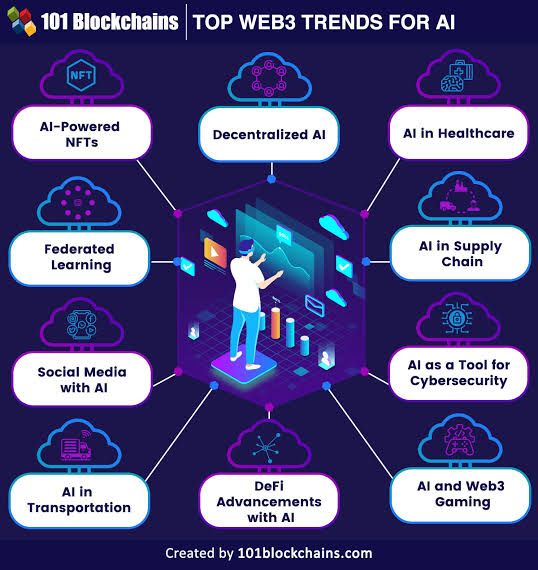
The combination of artificial intelligence and blockchain is becoming one of the most interesting Web3 developments.
AI agents can potentially perform tasks automatically, such as interacting with applications, moving digital assets or executing predefined transactions.
Industry research for 2026 increasingly identifies AI agents and on-chain payments as an emerging area of development.
However, automation also creates new risks. An AI agent operating a wallet still needs strong security controls, appropriate permissions and safeguards against errors.
5. DeFi Becomes More Mature
Decentralised finance, or DeFi, remains an important part of Web3 in 2026.
Instead of relying entirely on traditional intermediaries, DeFi applications use smart contracts to provide services such as lending, borrowing, trading and liquidity.
The difference in 2026 is that the sector is increasingly focused on risk management, compliance and real-world utility rather than simply chasing extremely high yields.
Research from CoinGecko indicates that DeFi remains one of the sectors surviving the shift toward product-market fit in the 2026 crypto market.
6. Blockchain Payments Continue Growing
Blockchain-based payments are becoming another important Web3 use case.
Stablecoins can potentially enable faster transfers across borders and support programmable payment systems. This is particularly interesting for businesses operating internationally.
The growing interest in stablecoin settlement suggests that blockchain may increasingly function behind the scenes rather than requiring ordinary users to understand the technology themselves.
7. Layer-2 Networks Focus on Scalability

Blockchain scalability remains important in 2026.
Layer-2 networks are designed to help blockchain ecosystems process transactions more efficiently while remaining connected to underlying networks.
As Web3 applications attract more users, improving transaction speed, cost and reliability becomes increasingly important. Current 2026 research also points toward a more mature and consolidated Layer-2 ecosystem.
8. Digital Identity Becomes More Important
Digital identity is another area worth watching.
As Web3 applications become more connected with finance, AI and online services, users need ways to prove who they are without repeatedly sharing unnecessary personal information.
Identity systems may become particularly important for AI agents, regulated digital assets and applications that need to meet compliance requirements.
The combination of identity verification and AI-driven ecosystems is already appearing in 2026 digital-asset research.
9. DePIN and Decentralised Infrastructure
DePIN, short for Decentralised Physical Infrastructure Networks, is another Web3 area attracting attention.
The concept uses blockchain-based incentives to coordinate physical infrastructure such as wireless networks, computing resources, storage or other connected services.
The idea is to allow communities and independent operators to contribute infrastructure rather than relying entirely on a central company.
While the sector is still developing, DePIN remains one of the Web3 themes being watched in 2026.
10. Regulation Becomes a Major Web3 Trend
Perhaps the most important development is regulation.
As blockchain technology moves closer to mainstream finance, governments and regulators are paying greater attention to stablecoins, tokenised assets, custody, consumer protection and financial crime controls.
The World Economic Forum says regulatory clarity can help facilitate greater adoption and scalability of digital assets.
For Web3 companies, this means that technology alone is no longer enough. Projects increasingly need strong security, governance, transparency and compliance.
What Does Web3 Look Like in 2026?
The biggest change is that Web3 is becoming less about simply launching a new token and more about building useful infrastructure.
Stablecoins can support payments. Tokenization can bring traditional assets onto blockchain networks. DeFi can provide alternative financial services, while AI agents could automate some blockchain interactions.
At the same time, regulation and security are becoming increasingly important as adoption grows.
Final Thoughts
The biggest Web3 trends of 2026 include real-world asset tokenisation, stablecoins, institutional adoption, AI agents, DeFi, blockchain payments, Layer-2 scalability, digital identity and decentralised infrastructure.
The industry is clearly evolving. Rather than focusing only on speculation, more attention is now being placed on products that solve real problems and can operate within increasingly mature regulatory and security frameworks.
For anyone following Web3 in 2026, the most important question may no longer be “What is the next big crypto trend?” but rather “Which blockchain applications can deliver genuine value to everyday users and businesses?”


Crypto Tax Advisor Florida has become an important part of the modern financial landscape, but understanding crypto taxes can be challenging. Your transactions may result in federal tax liabilities whether you buy Bitcoin, sell digital assets, earn cryptocurrency through staking, or receive cryptocurrency as payment. For Florida residents, there is an important distinction to understand: Florida does not impose a personal individual income tax, which means individuals generally do not pay Florida personal income tax on their crypto gains. However, federal tax rules still apply.
This is why working with a knowledgeable crypto tax advisor in Florida can be valuable in 2026.
How Is Cryptocurrency Taxed?
The IRS generally treats digital assets as property for federal tax purposes. This means cryptocurrency transactions can have tax consequences similar to transactions involving other types of property.
For example, if you purchase Bitcoin and later sell it for more than you paid, the difference may represent a taxable capital gain. Your purchase price, sale price, and holding period typically determine your gain or loss. Crypto-to-crypto transactions can also require careful attention. Depending on the circumstances, exchanging one digital asset for another may result in a taxable event that must be reported.Because crypto investors can make hundreds or thousands of transactions across different wallets and exchanges, accurately calculating gains and losses can become complicated.
Why Florida Crypto Investors Need Tax Planning
Florida’s lack of individual state income tax can make the state attractive to investors and entrepreneurs. However, it does not eliminate federal crypto tax obligations.
A Florida resident may still need to report taxable cryptocurrency activity to the IRS. The absence of either an individual capital gains tax or an individual income tax in Florida is confirmed by the state’s Department of Revenue. This makes federal compliance especially important for Florida crypto investors.
A crypto tax advisor can help organize transaction records, identify taxable events, calculate gains and losses, and prepare information needed for federal tax filing.
What Is Form 1099-DA?
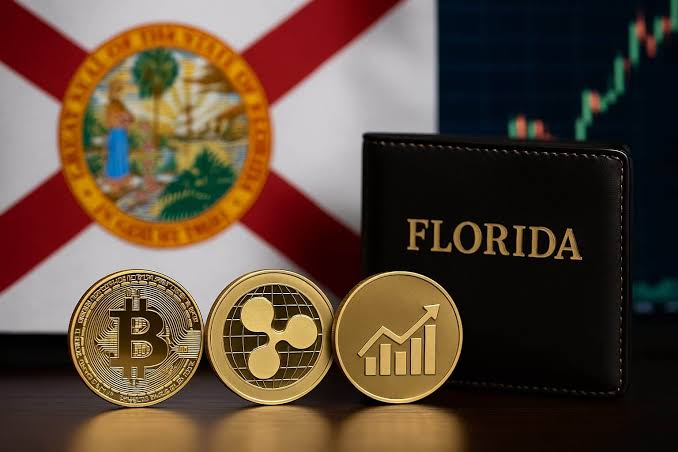
Form 1099-DA will play a larger role for crypto taxpayers in 2026, which will be one of the most significant developments. Form 1099-DA reporting will be required for certain digital asset transactions from January 1, 2025, as a result of the IRS’s introduction of broker reporting requirements. The form is designed to provide taxpayers and the IRS with information about digital asset transactions reported by brokers.
However, receiving or not receiving a 1099-DA does not necessarily determine whether a transaction is taxable. The responsibility for accurately reporting relevant digital asset activity remains with taxpayers. As a result, keeping your own records is crucial.
Transactions a Crypto Tax Advisor Can Help With
Crypto taxation can involve much more than simply buying and selling Bitcoin.
A tax professional may help with situations involving:
- Cryptocurrency sales
- Crypto-to-crypto exchanges
- Stablecoin transactions
- Staking rewards
- Mining income
- Airdrops and other digital asset income
- NFT transactions
- Business payments received in cryptocurrency
- Multiple exchanges and wallets
- Crypto investment losses
- Recordkeeping and tax reporting
The tax treatment can differ depending on how the digital assets were acquired and used, which is why maintaining detailed records is essential.
Choosing a Crypto Tax Advisor in Florida
Not every tax professional has extensive experience with cryptocurrency. When searching for a crypto tax advisor in Florida, investors should look for someone familiar with digital assets and current federal reporting requirements.
Consider asking potential advisors:
- Do you regularly work with crypto investors?
- Can you handle transactions from multiple exchanges and wallets?
- Are you familiar with Form 1099-DA?
- Can you help calculate crypto gains and losses?
- Do you understand staking, mining, NFTs, and DeFi transactions?
- How do you handle crypto recordkeeping?
- Will you help identify potential reporting issues from previous tax years?
Experience with cryptocurrency can be particularly important when an investor has a large transaction history or uses multiple platforms.
Keep Detailed Crypto Records
Good recordkeeping is one of the most important parts of crypto tax preparation.
Investors should keep information such as purchase dates, sale dates, transaction amounts, asset types, transaction prices, fees, wallet transfers, and relevant exchange records.
Moving cryptocurrency between wallets that you own can be different from selling or exchanging an asset, but accurate records help demonstrate what actually happened.
Organized records can make tax preparation easier and help reduce the risk of incorrect reporting.
Final Thoughts
For Florida crypto investors, 2026 brings both opportunities and greater attention to digital asset reporting. Although there is no individual income tax in Florida, federal cryptocurrency tax responsibilities remain. With Form 1099-DA reporting becoming part of the digital asset tax environment, accurate records and proper reporting are more important than ever.
A qualified crypto tax advisor in Florida can help investors understand their reporting responsibilities, organize complex transactions, and prepare for changing digital asset tax requirements.
The best approach is simple: keep detailed records, understand your taxable transactions, and seek professional advice when your crypto activity becomes complex.
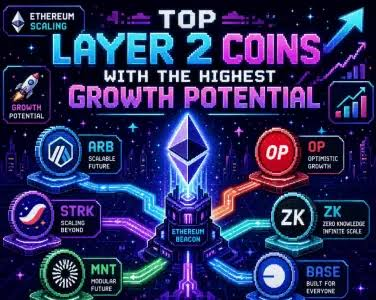
Layer-2 (L2) blockchain networks are becoming more and more popular as the bitcoin market gets ready for its next significant growth cycle. Although Ethereum is still one of the most popular blockchain ecosystems, its Layer-2 solutions are becoming more crucial for lowering transaction costs, enhancing scalability, and facilitating decentralized applications.
Understanding the Layer-2 sector may be crucial for investors and cryptocurrency fans anticipating the next bull run. A number of initiatives are vying to play a significant role in Ethereum’s scaling future, from optimistic rollups to zero-knowledge solutions.
What Are Layer-2 Networks?
Layer-2 networks are blockchain solutions that use Ethereum as the underlying settlement layer and are intended to process transactions more effectively. L2 networks can conduct transactions off the main chain and then settle or verify the outcomes on Ethereum, as opposed to directly recording every transaction on Ethereum.This strategy can speed up transactions and lower transaction costs.
Why Layer-2 Tokens Could Benefit From the Next Bull Run
Increased user activity frequently results in higher demand for blockchain infrastructure during a robust crypto market cycle. Layer-2 networks may gain from more transactions and applications passing thru their ecosystems if Ethereum activity keeps increasing.
Adoption by developers is another crucial element. Layer-2 startups are vying for users, developers, decentralized applications, and liquidity. During the next market expansion, networks that are successful in creating robust ecosystems may become more significant.
Investors should keep in mind, too, that Layer-2 tokens are still very speculative. Market mood, token unlocks, competition, regulations, and shifts in network usage can all have an impact on token pricing.
Key Layer-2 Trends to Watch in 2026
1. Zero-Knowledge Rollups
One of the key technologies in Ethereum scalability is zero-knowledge rollups. They can combine several transactions and confirm their legitimacy with cryptographic proofs.
ZK-based networks may become more competitive as technology advances for applications that need quick and economical transactions.
2. Layer-2 Adoption
Real-world adoption is one of the most important metrics to track. Metrics like transaction activity, active users, developer activity, total value locked (TVL), and the quantity of decentralized applications running on a network are all available to investors.
A project whose value is mostly dependent on market speculation can have weaker fundamentals than one whose utilization is increasing.
3. Competition Between L2 Networks
There is growing competition in the Layer-2 sector. Newer initiatives and well-established ecosystems are vying for consumers, developers, liquidity, and applications.
As the industry develops, projects like Arbitrum, Optimism, Starknet, zkSync, and other scaling networks may encounter both possibilities and difficulties.
4. Lower Transaction Costs
Lower transaction costs when compared to Ethereum mainnet transactions are one of the main justifications for utilizing Layer-2 networks.
L2 networks may play a bigger role in the larger Ethereum ecosystem if they can keep enhancing performance while preserving security and decentralization.
5. Interoperability
Interoperability may become a significant trend as Layer-2 networks proliferate. Users don’t want to feel confined to just one L2 ecosystem or blockchain.
Future crypto infrastructure may heavily rely on solutions that facilitate asset transfers and cross-network application interaction.
What Investors Should Watch
Investors should analyze more than just a Layer-2 token’s price chart. Network activity, ecosystem expansion, token supply, impending unlocks, developer acceptance, collaborations, liquidity, and the token’s real utility are all significant variables.
Differentiating between a successful token investment and a successful blockchain network is also crucial. A network may expand quickly while its native token is under pressure to be sold due to inflation or token unlocking.
Final Thoughts
The next stage of Ethereum’s development may be significantly influenced by Layer-2 networks. Scalability improvements, reduced costs, zero-knowledge technologies, and growing application usage could open up new business prospects for the industry as a whole.
Layer-2 tokens are worth considering for investors anticipating the next cryptocurrency boom in 2026, but they should be assessed using network fundamentals rather than just hype.
Because of the intense competition in the Layer-2 industry, not every project will succeed in the long run. Before making any investment decision, thorough research, risk management, and a grasp of token economics are still crucial.
-

 Technology & AI3 months ago
Depomin82: Rethinking Digital Infrastructure for a Smarter Connected Future
-

 Fashion2 months ago
How to Build a Capsule Wardrobe on a UK Budget
-

 Business3 months ago
The Hidden Expenses in eCommerce Accounting: The Reasons Most UK Online Retailers Calculate Profit incorrectly
-

 Celebrity2 months ago
What is Tom Hardy’s Net Worth and Salary?
-

 Fashion2 months ago
Here are the Top 8 Luxury Clothing Brands in the UK for 2026
-

 Celebrity3 months ago
Fred Dimbleby: ITV News’s Top Political Journalist and His Influence on UK Reportin
-

 Blog3 months ago
mmsbre: Reimagining Digital Connectivity in a Hyper-Intelligent World
-
Uncategorized3 months ago
Hello world!