
Crypto
Layer-2 Crypto Trends to Watch Before the Next Bull Run in 2026

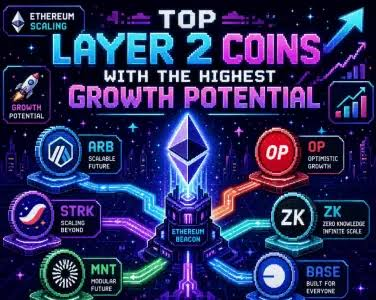
Layer-2 (L2) blockchain networks are becoming more and more popular as the bitcoin market gets ready for its next significant growth cycle. Although Ethereum is still one of the most popular blockchain ecosystems, its Layer-2 solutions are becoming more crucial for lowering transaction costs, enhancing scalability, and facilitating decentralized applications.
Understanding the Layer-2 sector may be crucial for investors and cryptocurrency fans anticipating the next bull run. A number of initiatives are vying to play a significant role in Ethereum’s scaling future, from optimistic rollups to zero-knowledge solutions.
What Are Layer-2 Networks?
Layer-2 networks are blockchain solutions that use Ethereum as the underlying settlement layer and are intended to process transactions more effectively. L2 networks can conduct transactions off the main chain and then settle or verify the outcomes on Ethereum, as opposed to directly recording every transaction on Ethereum.This strategy can speed up transactions and lower transaction costs.
Why Layer-2 Tokens Could Benefit From the Next Bull Run
Increased user activity frequently results in higher demand for blockchain infrastructure during a robust crypto market cycle. Layer-2 networks may gain from more transactions and applications passing thru their ecosystems if Ethereum activity keeps increasing.
Adoption by developers is another crucial element. Layer-2 startups are vying for users, developers, decentralized applications, and liquidity. During the next market expansion, networks that are successful in creating robust ecosystems may become more significant.
Investors should keep in mind, too, that Layer-2 tokens are still very speculative. Market mood, token unlocks, competition, regulations, and shifts in network usage can all have an impact on token pricing.
Key Layer-2 Trends to Watch in 2026
1. Zero-Knowledge Rollups
One of the key technologies in Ethereum scalability is zero-knowledge rollups. They can combine several transactions and confirm their legitimacy with cryptographic proofs.
ZK-based networks may become more competitive as technology advances for applications that need quick and economical transactions.
2. Layer-2 Adoption
Real-world adoption is one of the most important metrics to track. Metrics like transaction activity, active users, developer activity, total value locked (TVL), and the quantity of decentralized applications running on a network are all available to investors.
A project whose value is mostly dependent on market speculation can have weaker fundamentals than one whose utilization is increasing.
3. Competition Between L2 Networks
There is growing competition in the Layer-2 sector. Newer initiatives and well-established ecosystems are vying for consumers, developers, liquidity, and applications.
As the industry develops, projects like Arbitrum, Optimism, Starknet, zkSync, and other scaling networks may encounter both possibilities and difficulties.
4. Lower Transaction Costs
Lower transaction costs when compared to Ethereum mainnet transactions are one of the main justifications for utilizing Layer-2 networks.
L2 networks may play a bigger role in the larger Ethereum ecosystem if they can keep enhancing performance while preserving security and decentralization.
5. Interoperability
Interoperability may become a significant trend as Layer-2 networks proliferate. Users don’t want to feel confined to just one L2 ecosystem or blockchain.
Future crypto infrastructure may heavily rely on solutions that facilitate asset transfers and cross-network application interaction.
What Investors Should Watch
Investors should analyze more than just a Layer-2 token’s price chart. Network activity, ecosystem expansion, token supply, impending unlocks, developer acceptance, collaborations, liquidity, and the token’s real utility are all significant variables.
Differentiating between a successful token investment and a successful blockchain network is also crucial. A network may expand quickly while its native token is under pressure to be sold due to inflation or token unlocking.
Final Thoughts
The next stage of Ethereum’s development may be significantly influenced by Layer-2 networks. Scalability improvements, reduced costs, zero-knowledge technologies, and growing application usage could open up new business prospects for the industry as a whole.
Layer-2 tokens are worth considering for investors anticipating the next cryptocurrency boom in 2026, but they should be assessed using network fundamentals rather than just hype.
Because of the intense competition in the Layer-2 industry, not every project will succeed in the long run. Before making any investment decision, thorough research, risk management, and a grasp of token economics are still crucial.
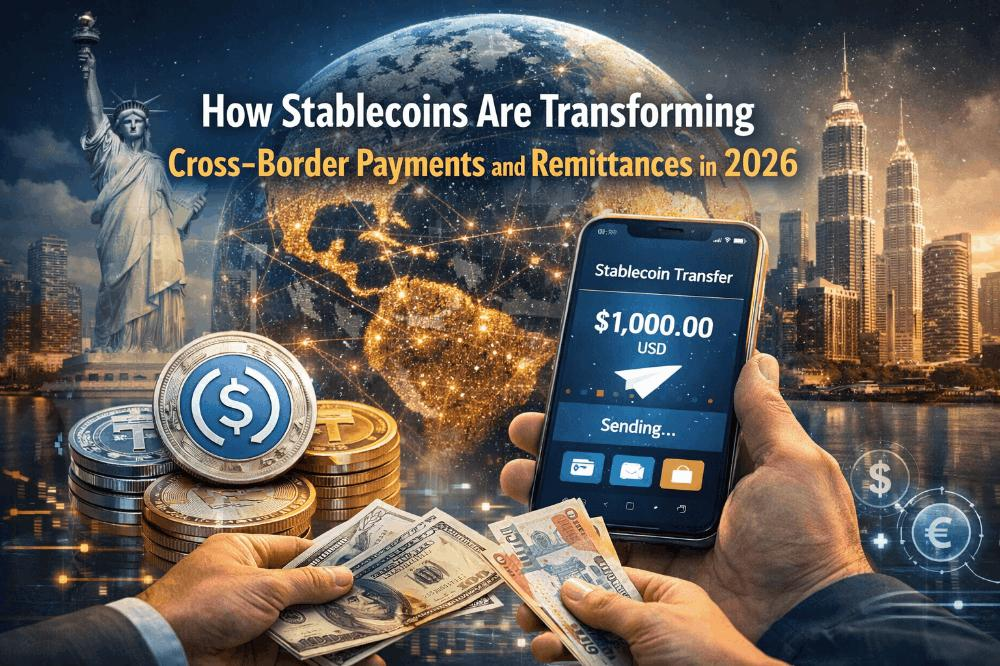
Stablecoin are becoming one of the most important parts of the digital-asset economy in 2026. Unlike highly volatile cryptocurrencies, stablecoins are designed to maintain a relatively stable value, usually by referencing a currency such as the US dollar or another asset. Their role is also expanding beyond crypto trading, with growing interest in payments, remittances, tokenized assets and financial infrastructure.
1. Stablecoins Move Beyond Crypto Trading
For years, stablecoins were mainly used by cryptocurrency traders who needed a digital asset that could move quickly between exchanges and blockchain applications. In 2026, their potential use cases are becoming much broader.
Businesses and financial institutions are exploring stablecoins for payments, settlement and cross-border transactions. This shift could eventually make stablecoins useful even for people who never actively trade cryptocurrencies.
The UK is also examining stablecoin payment applications. The Financial Conduct Authority ran a 2026 policy sprint focused on retail payments and remittances, showing how seriously regulators are considering their potential role in everyday finance.
2. Cross-Border Payments Become a Major Focus
One of the strongest stablecoin trends in 2026 is international payments.
Traditional cross-border transfers can involve several intermediaries and may take time to settle. Stablecoins can potentially move value across blockchain networks at any time, creating opportunities for faster and more flexible transactions.
This is particularly interesting for remittances and businesses operating internationally. The IMF has highlighted the potential for stablecoins to increase competition in digital payments and potentially reduce remittance costs.
However, the benefits will depend on regulation, liquidity, blockchain infrastructure and the ability to convert stablecoins into local currencies efficiently.
3. Local-Currency Stablecoins Gain Attention
The stablecoin market has historically been dominated by US-dollar-linked assets. But another interesting trend is the development of stablecoins connected to other currencies.
Research highlighted by Visa in 2026 points to growing interest in non-dollar stablecoins, including assets denominated in euros, Brazilian, Singapore dollars and Japanese yen.
Instead of every international transaction relying on a dollar-based token, users could eventually have more choices based on their local currency and payment requirements.
4. Stablecoins and Tokenized Assets Work Together
Stablecoins are also becoming closely connected with the broader tokenization movement.
Tokenization involves representing assets or financial claims on blockchain infrastructure. Tokenized funds, securities and other financial products need reliable forms of digital money for settlement. Stablecoins can potentially provide that settlement layer.
The IMF’s 2026 research identifies stablecoins, tokenized deposits, securities and money-market funds as important components of the emerging tokenized financial system.
This means the future of stablecoins may not be limited to payments. They could become part of the infrastructure supporting a much larger digital financial market.
5. Regulation Becomes a Defining Trend
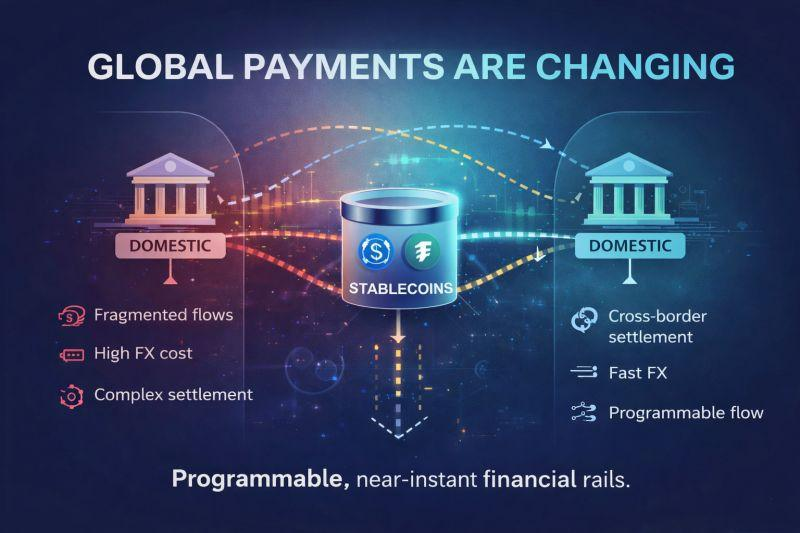
Regulation is one of the biggest stories surrounding stablecoins in 2026.
Governments and regulators are working to establish clearer requirements around issuers, reserves, consumer protection and financial stability. In the UK, the Bank of England published a policy statement and draft rules for systemic stablecoin issuers in June 2026.
The FCA is also developing the UK’s wider stablecoin framework. Its final cryptoasset policy statements were published in June, with the regulatory gateway for firms scheduled to open on September 30, 2026.
Clearer rules could encourage legitimate companies and financial institutions to enter the market, although regulation may also increase compliance costs.
6. Institutional Adoption Could Accelerate
Banks, payment companies and asset managers are paying increasing attention to stablecoins. Their interest is not simply about cryptocurrency speculation; it is increasingly connected to settlement, payments and tokenized financial products.
Recent developments show stablecoin companies building stronger relationships with regulated financial infrastructure. For example, Circle’s USDC circulation increased year over year during the second quarter of 2026, while the company continued expanding its institutional and payments infrastructure.
If more institutions adopt stablecoins, their use could become less dependent on crypto-native users.
7. Security and Transparency Remain Essential
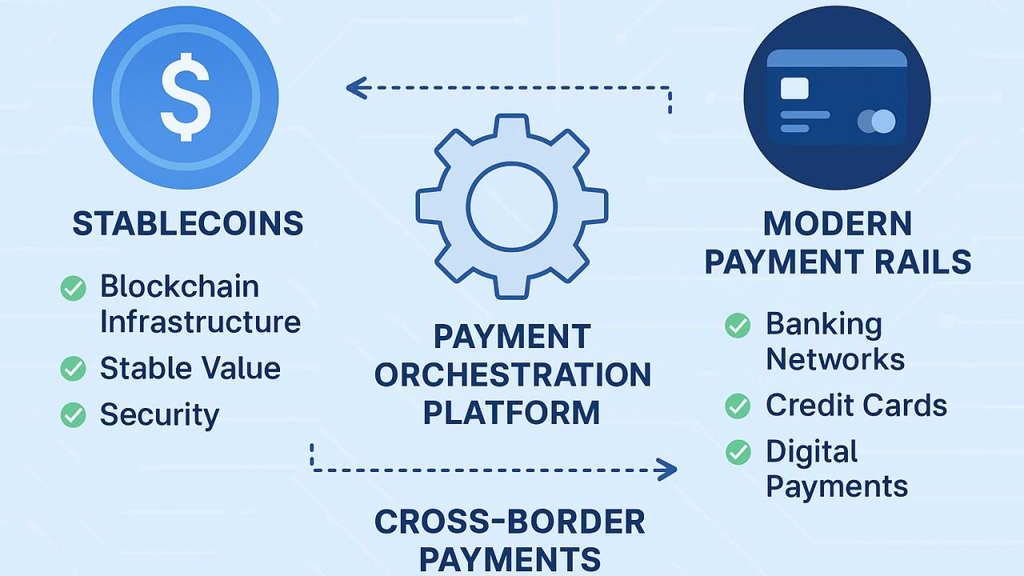
Growth also brings risks. Stablecoin users need confidence that the tokens can maintain their intended value and that issuers manage reserves responsibly.
Questions around reserves, redemption, governance, cybersecurity and regulatory compliance will remain important in 2026. A stablecoin may appear simple to users, but its underlying financial and technological infrastructure can be complex.
For this reason, transparency could become an increasingly important competitive advantage. Users and businesses may prefer stablecoins with clear information about reserves, governance and redemption mechanisms.
The Future of Stablecoins in 2026
The biggest stablecoin trend in 2026 is the transition from a crypto trading tool toward a broader form of digital financial infrastructure. Payments, remittances, local-currency digital money, tokenized assets and institutional finance are all creating new possibilities.
Stablecoins are unlikely to replace traditional money overnight. Instead, they may gradually become another layer connecting blockchain networks with the existing financial system.
As regulation becomes clearer and infrastructure improves, 2026 could prove to be an important year for stablecoins. The projects that combine transparency, reliable technology, useful payment applications and regulatory compliance are likely to have the strongest chance of long-term adoption.
FAQs
1. What are stablecoins?
Stablecoins are digital assets designed to maintain a stable value, often linked to currencies like the US dollar.
2. What are the biggest stablecoin trends in 2026?
Key trends include faster payments, cross-border transfers, tokenized assets, regulation, and institutional adoption.
3. Are stablecoins useful for international payments?
Yes, stablecoins can enable faster and potentially more efficient cross-border transactions.
4. Will stablecoin regulation increase in 2026?
Yes, regulators are developing clearer rules covering issuers, reserves, consumer protection, and financial stability.
5. Are stablecoins completely risk-free?
No. They still involve risks related to reserves, technology, regulation, cybersecurity, and issuer reliability.
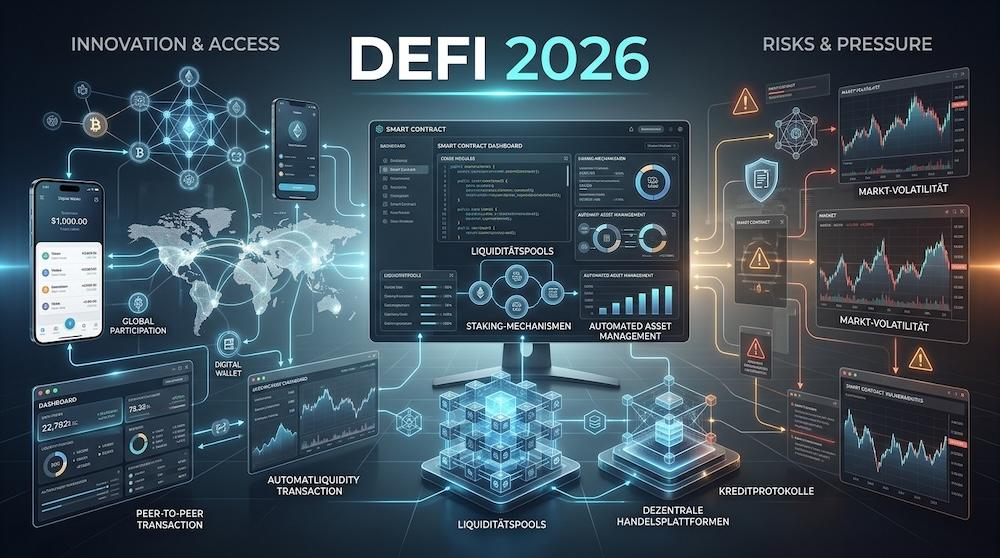
Decentralized finance (DeFi) is entering a more mature phase in 2026. Instead of being driven mainly by speculative tokens and high-yield farming, the sector is increasingly focused on practical financial services, stablecoins, tokenized real-world assets, institutional participation, and better infrastructure.
Industry analysts expect DeFi to become more closely connected with traditional finance as blockchain technology moves from experimentation toward real-world financial applications.
1. Real-World Assets Move On-Chain
One of the biggest DeFi trends in 2026 is the continued growth of real-world asset (RWA) tokenization. Financial assets such as government bonds, funds, commodities and other investments can be represented as blockchain-based tokens.
Tokenization can make assets easier to transfer, divide into smaller ownership units and use as collateral within DeFi applications. The World Economic Forum identifies asset tokenization as a major development for 2026, while recent market analysis shows growing institutional interest in tokenized public-market assets.
This could make DeFi less dependent on purely crypto-native assets and create stronger connections between blockchain markets and traditional financial products.
2. Stablecoins Become More Important
Stablecoins are becoming one of the most practical parts of the digital-asset ecosystem. Unlike highly volatile cryptocurrencies, stablecoins are designed to maintain a relatively stable value, making them useful for payments, trading, lending and transferring money.
In 2026, their role is expanding beyond crypto exchanges. Stablecoins are increasingly being explored for cross-border payments, remittances, business transactions and financial applications.
Regulation is also becoming an important factor. Clearer rules around reserves, issuance and supervision could encourage more businesses and financial institutions to use stablecoins.
3. DeFi and Traditional Finance Come Together
Another important trend is the convergence of DeFi with traditional finance, often called TradFi. Banks, asset managers and other financial institutions are increasingly experimenting with blockchain-based infrastructure and tokenized financial products.
The goal is not necessarily to replace banks. Instead, blockchain can automate parts of financial operations, improve settlement and allow assets to move through programmable systems. The IMF notes that tokenization can combine execution, clearing and settlement more closely through shared ledgers and smart contracts.
This could lead to a new financial environment where decentralized and traditional systems work alongside each other.
4. Smarter DeFi Lending
Lending remains a core part of DeFi, but the sector is becoming more sophisticated. Modern lending protocols can use automated collateral management, real-time monitoring and smart contracts to manage loans.
The next generation of DeFi lending is likely to focus more on sustainable liquidity and risk management rather than simply offering extremely high yields. This shift could make decentralized lending more attractive to professional users who care about predictable returns and transparent rules.
5. AI Meets DeFi
Artificial intelligence is becoming another emerging trend in decentralized finance. AI-powered agents can potentially help users analyze markets, compare lending opportunities, manage portfolios and execute certain blockchain transactions.
Research published in August 2026 highlights the emergence of autonomous AI agents that can perform DeFi actions such as swaps, lending and yield management.
However, AI-driven finance also introduces new security challenges. Users will need safeguards that prevent automated systems from executing unauthorized or harmful transactions.
6. Cross-Chain DeFi Grows
DeFi is no longer limited to a single blockchain. Users and applications increasingly need ways to move assets and liquidity between different networks.
Cross-chain infrastructure could therefore become more important in 2026. Better interoperability can help reduce fragmentation and allow users to access different DeFi services without being locked into one ecosystem.
At the same time, cross-chain systems remain an important security area because bridges and interoperability protocols can create additional points of failure.
7. Security Becomes a Bigger Priority
As DeFi becomes more valuable, security is becoming impossible to ignore. Smart-contract vulnerabilities, compromised protocols and poorly designed systems can cause significant losses.
Recent research covering DeFi incidents in the first half of 2026 reported substantial losses and found that many attack paths were outside the scope of identified pre-incident audits.
For users, this means choosing DeFi platforms based not only on yield but also on security practices, transparency, audits, governance and risk controls.
What Does the Future of DeFi Look Like?
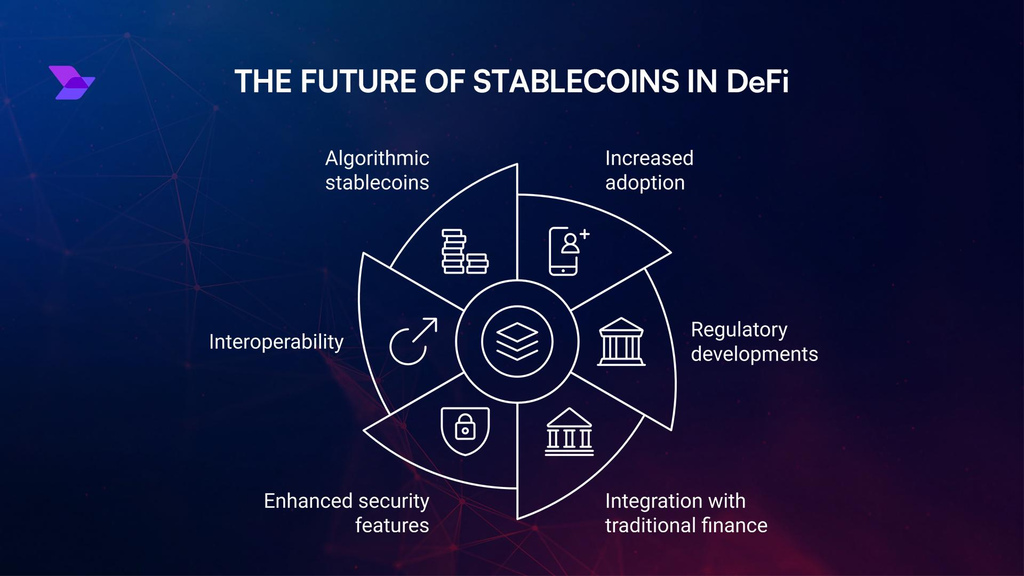
The biggest DeFi trend in 2026 is arguably the move from experimentation toward practical financial infrastructure. Stablecoins, tokenized assets, automated lending, institutional participation, AI and cross-chain technology are helping reshape the ecosystem.
DeFi may become less about chasing unrealistic returns and more about building faster, programmable and globally accessible financial services. However, regulation, security and user protection will remain critical.
If these challenges are handled effectively, 2026 could become an important turning point for DeFi, bringing decentralized technologies closer to everyday finance while creating new opportunities for investors, businesses and financial institutions.
FAQs: DeFi Trends 2026
1. What are the biggest DeFi trends in 2026?
The major trends include real-world asset tokenization, stablecoins, AI-powered DeFi, institutional adoption, cross-chain finance, decentralized lending, and stronger security.
2. Is DeFi still relevant in 2026?
DeFi is evolving from a highly speculative sector into a broader financial infrastructure focused on practical applications such as lending, payments, asset tokenization, and automated financial services.
3. What are Real-World Assets (RWAs) in DeFi?
RWAs are traditional assets represented as blockchain-based tokens. Examples can include government bonds, funds, commodities, and other financial assets.
4. Will AI play a role in DeFi in 2026?
Yes. AI can help analyze markets, identify opportunities, manage portfolios, and automate certain DeFi transactions. However, automated systems also introduce additional security and risk considerations.

Web3 is entering a new phase in 2026. The industry is moving beyond the hype surrounding cryptocurrencies and NFTs and increasingly focusing on practical applications of blockchain technology.
Financial institutions, technology companies and developers are exploring blockchain for payments, tokenised assets, digital identity, decentralised finance and AI-powered applications. The World Economic Forum describes 2026 as an important year for digital assets, with tokenisation and enterprise blockchain adoption becoming increasingly significant.
So, what are the biggest Web3 trends to watch in 2026?
1. Real-World Asset Tokenisation
One of the biggest Web3 trends in 2026 is real-world asset (RWA) tokenisation.
Tokenisation means representing an asset—such as a bond, fund, property or other financial instrument—as a blockchain-based digital token. This can potentially make certain assets easier to transfer, divide and settle.
The World Economic Forum and IMF both identify tokenisation as an increasingly important development in financial markets.
In 2026, the conversation is increasingly moving from whether tokenisation is possible to how it can be used at scale.
2. Stablecoins Become More Important
Stablecoins are another major Web3 trend.
Unlike cryptocurrencies that can experience large price movements, stablecoins are designed to maintain a relatively stable value, often through reserves or other mechanisms. They are increasingly being explored for payments, settlement, remittances and movement of money between traditional and blockchain-based systems.
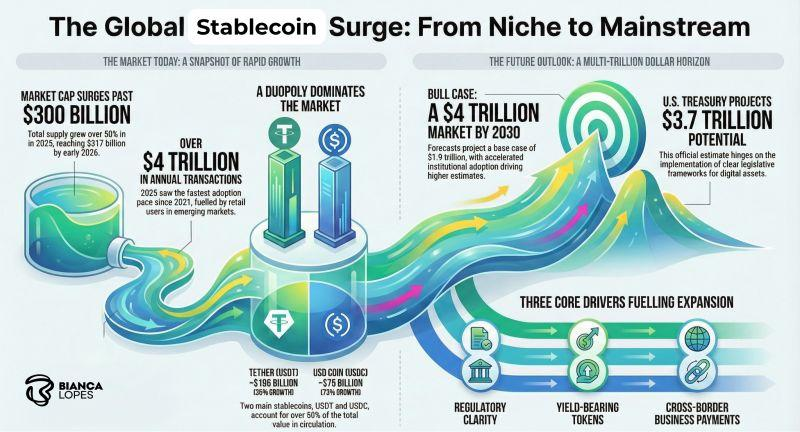
CoinDesk Research reported that stablecoin market capitalization had surpassed $300 billion entering 2026, highlighting the much larger role stablecoins now play in digital-asset markets.
The Bank for International Settlements, however, has also highlighted risks around stablecoin design, reserves and financial integrity, showing why regulation will remain important.
3. Traditional Finance and Web3 Move Closer Together
The gap between traditional finance and Web3 is becoming smaller.
Banks, asset managers and other financial institutions are exploring blockchain-based infrastructure for tokenised assets, custody, settlement and payments.
PwC notes that tokenisation, stablecoins and institutional DeFi are contributing to a shift toward programmable and more continuous financial infrastructure.
This could make 2026 an important year for the integration of blockchain technology into mainstream financial services.
4. AI Agents Meet Blockchain
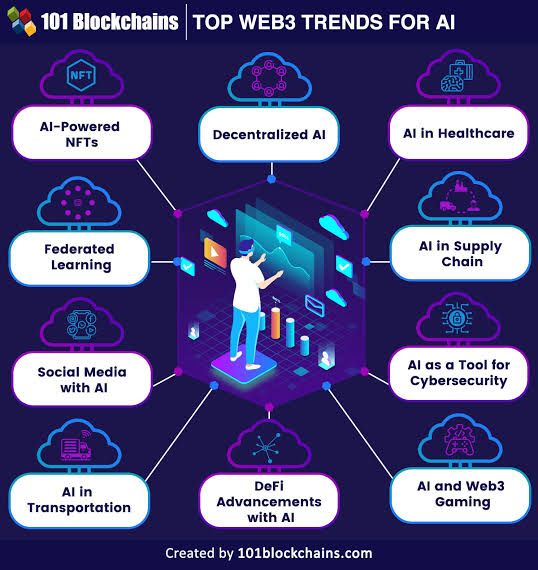
The combination of artificial intelligence and blockchain is becoming one of the most interesting Web3 developments.
AI agents can potentially perform tasks automatically, such as interacting with applications, moving digital assets or executing predefined transactions.
Industry research for 2026 increasingly identifies AI agents and on-chain payments as an emerging area of development.
However, automation also creates new risks. An AI agent operating a wallet still needs strong security controls, appropriate permissions and safeguards against errors.
5. DeFi Becomes More Mature
Decentralised finance, or DeFi, remains an important part of Web3 in 2026.
Instead of relying entirely on traditional intermediaries, DeFi applications use smart contracts to provide services such as lending, borrowing, trading and liquidity.
The difference in 2026 is that the sector is increasingly focused on risk management, compliance and real-world utility rather than simply chasing extremely high yields.
Research from CoinGecko indicates that DeFi remains one of the sectors surviving the shift toward product-market fit in the 2026 crypto market.
6. Blockchain Payments Continue Growing
Blockchain-based payments are becoming another important Web3 use case.
Stablecoins can potentially enable faster transfers across borders and support programmable payment systems. This is particularly interesting for businesses operating internationally.
The growing interest in stablecoin settlement suggests that blockchain may increasingly function behind the scenes rather than requiring ordinary users to understand the technology themselves.
7. Layer-2 Networks Focus on Scalability

Blockchain scalability remains important in 2026.
Layer-2 networks are designed to help blockchain ecosystems process transactions more efficiently while remaining connected to underlying networks.
As Web3 applications attract more users, improving transaction speed, cost and reliability becomes increasingly important. Current 2026 research also points toward a more mature and consolidated Layer-2 ecosystem.
8. Digital Identity Becomes More Important
Digital identity is another area worth watching.
As Web3 applications become more connected with finance, AI and online services, users need ways to prove who they are without repeatedly sharing unnecessary personal information.
Identity systems may become particularly important for AI agents, regulated digital assets and applications that need to meet compliance requirements.
The combination of identity verification and AI-driven ecosystems is already appearing in 2026 digital-asset research.
9. DePIN and Decentralised Infrastructure
DePIN, short for Decentralised Physical Infrastructure Networks, is another Web3 area attracting attention.
The concept uses blockchain-based incentives to coordinate physical infrastructure such as wireless networks, computing resources, storage or other connected services.
The idea is to allow communities and independent operators to contribute infrastructure rather than relying entirely on a central company.
While the sector is still developing, DePIN remains one of the Web3 themes being watched in 2026.
10. Regulation Becomes a Major Web3 Trend
Perhaps the most important development is regulation.
As blockchain technology moves closer to mainstream finance, governments and regulators are paying greater attention to stablecoins, tokenised assets, custody, consumer protection and financial crime controls.
The World Economic Forum says regulatory clarity can help facilitate greater adoption and scalability of digital assets.
For Web3 companies, this means that technology alone is no longer enough. Projects increasingly need strong security, governance, transparency and compliance.
What Does Web3 Look Like in 2026?
The biggest change is that Web3 is becoming less about simply launching a new token and more about building useful infrastructure.
Stablecoins can support payments. Tokenization can bring traditional assets onto blockchain networks. DeFi can provide alternative financial services, while AI agents could automate some blockchain interactions.
At the same time, regulation and security are becoming increasingly important as adoption grows.
Final Thoughts
The biggest Web3 trends of 2026 include real-world asset tokenisation, stablecoins, institutional adoption, AI agents, DeFi, blockchain payments, Layer-2 scalability, digital identity and decentralised infrastructure.
The industry is clearly evolving. Rather than focusing only on speculation, more attention is now being placed on products that solve real problems and can operate within increasingly mature regulatory and security frameworks.
For anyone following Web3 in 2026, the most important question may no longer be “What is the next big crypto trend?” but rather “Which blockchain applications can deliver genuine value to everyday users and businesses?”
-

 UK News1 month ago
UK Wildfires 2026: Why Are Fires Spreading and Which Areas Are at Risk?
-

 Crypto2 months ago
Crypto Trading May Be Algorithmic in the Future, but Not Completely Autonomous
-

 Fashion3 months ago
Here are the Top 8 Luxury Clothing Brands in the UK for 2026?
-

 Technology & AI4 months ago
Depomin82: Rethinking Digital Infrastructure for a Smarter Connected Future
-

 Fashion3 months ago
How to Build a Capsule Wardrobe on a UK Budget?
-

 Business4 months ago
The Hidden Expenses in eCommerce Accounting: The Reasons Most UK Online Retailers Calculate Profit incorrectly
-

 Celebrity3 months ago
Liam Costner: Life, Career, and Family Beyond Hollywood
-

 Celebrity3 months ago
Tom Hardy Net Worth in 2026: Salary, Earnings & Career Highlights