
Technology & AI
How Technology Is Transforming Property Management


Managing rental properties requires constant multitasking. To name a few, you must market vacant units, screen applicants, collect rent, and handle maintenance requests. People managed all of this for years using spreadsheets, paper files, and incessant phone calls. Technology, on the other hand, makes it much easier to run and expand property management businesses today.
Property Management’s Changing Landscape
In recent years, property management has undergone significant change. Work that was mostly done by hand and on paper is now becoming more and more digital. Customers’ expectations and practical needs are both driving this shift. Tenants of today expect the same level of convenience from their landlords as they do from apps and online tools for managing their lives.
They anticipate being able to submit a request for maintenance, pay rent, and apply for a lease with just a few taps on their phone. The market’s competitiveness is changing as a result of this demand for digital access. Those property managers who stick to traditional methods run the risk of falling behind those who use technology to provide faster and more responsive service.
TechnologyAdditionally, the work itself is becoming more difficult. Maintaining detailed financial records, communicating with multiple properties, and adhering to local regulations all require a level of organization that manual systems simply cannot handle. Technology is a major contributor to the rapid expansion of the global market for property management.
From Manual Tasks to Automated Workflows
Think about all the time you spend on routine office work. Tasks like chasing rent payments that haven’t been paid on time, manually entering financial data into spreadsheets, or scheduling maintenance appointments between tenants and vendors consume time that could be used to grow your business or improve relationships with tenants. Automation is crucial for any property management company because of this. Repetitive, time-consuming tasks that can easily slow down your workflow are taken care of by automated systems.
You can automate rent collection, send reminders for payments, manage maintenance requests, screen tenants, sign leases electronically, and keep communication organized in one location rather than manually collecting checks or tracking paperwork. These essential tasks are brought together by modern landlord software, allowing you to stay organized and keep a clear digital record of every interaction and transaction. As a result, your business runs more smoothly, you don’t have to deal with as many administrative problems, and you have more time to focus on making your tenants’ experiences great.
Leveraging Digital Tools for Efficiency
Other digital tools can help a property manager work even more efficiently than all-in-one platforms. The objective is to develop a connected system that simplifies all aspects of the job.
- Digital marketing and listing syndication: You need to show your listings to as many qualified renters as you can to keep units occupied. You can simultaneously post an empty unit to multiple popular rental websites using digital tools. Nowadays, professional photos and virtual tours are also standard, allowing prospective tenants to get a sense of the property before actually visiting.
- Services for Tenant Screening: Protecting your investment requires thorough tenant screening. In just a few minutes, you can get comprehensive background checks, credit reports, and eviction histories from online screening services. This helps you select dependable tenants based on consistent, data-driven information and speeds up the application process.
- Platforms for communication: Rapid and clear communication is essential. Even though phone calls and emails are still useful, property management apps’ special messaging features keep all conversations in one place and record them. You can answer a single tenant’s question and send announcements about maintenance or community events to the entire building at the same time.
Enhancing Tenant Experience Through Tech
Technology not only makes processes run more smoothly behind the scenes, but it also directly enhances the tenant experience. Tenants are more likely to stay if they have a positive living experience, which reduces the cost of finding and moving in new renters. Tenants are more likely to renew their leases if they feel heard and their needs are met quickly.
Technology facilitates professional relationships that run smoothly. An excellent illustration is providing an online tenant portal. Tenants have the option, via a portal:
- Set up automatic payments and pay rent.
- Send maintenance requests at any time and keep track of them.
- Gain access to essential documents such as their lease agreement.
- Get important announcements about the building
Tenants gain more control and experience less frustration when there is self-service and transparency like this. They don’t have to worry about the status of their request or wait until office hours to report a dripping faucet. According to industry reports, renters are increasingly choosing a location based on technological features and online portals. Offering these conveniences can distinguish your properties and assist you in establishing a steady, long-term tenant base.
Measuring ROI on Technology Investments
It’s normal to wonder if buying new software is worth the money. The return on investment (ROI) of property management technology can be measured in both substantial operational and financial gains. You need to look at more than just the monthly fee to get the full picture. First, determine the direct amount of time saved. Calculate the monthly hours spent by you and your staff on tasks like rent collection, bookkeeping, and answering questions.
Calculate the labor cost by multiplying those hours by an hourly rate. This administrative time can be cut by 50 percent or more with most software platforms. Second, think about how it affects vacancies. Faster marketing, online applications, and efficient screening can shorten how long units sit empty by days or even weeks, which means more rental income for you.
Consider the additional advantages in addition to these direct financial figures.
- Fewer Errors: Accounting and lease management errors can be avoided with automation.
- Better Maintenance Costs: A streamlined request and tracking system can assist you in resolving minor issues before they become costly emergencies. Increased Tenant Retention: As we discussed, a positive tenant experience reduces tenant turnover and saves money on marketing, cleaning, and screening.
- Capacity for Expansion: Technology makes it possible to manage more units without having to hire a large number of administrative staff members, which helps your business grow.
When you add up all of these benefits, investing in technology frequently pays for itself quickly and continues to provide value for a significant amount of time. In the end, incorporating technology into your property management business is no longer merely an option; rather, it is an essential component of running a modern, profitable operation. It helps you work faster, provide better service, and build a business that is more profitable and scalable.




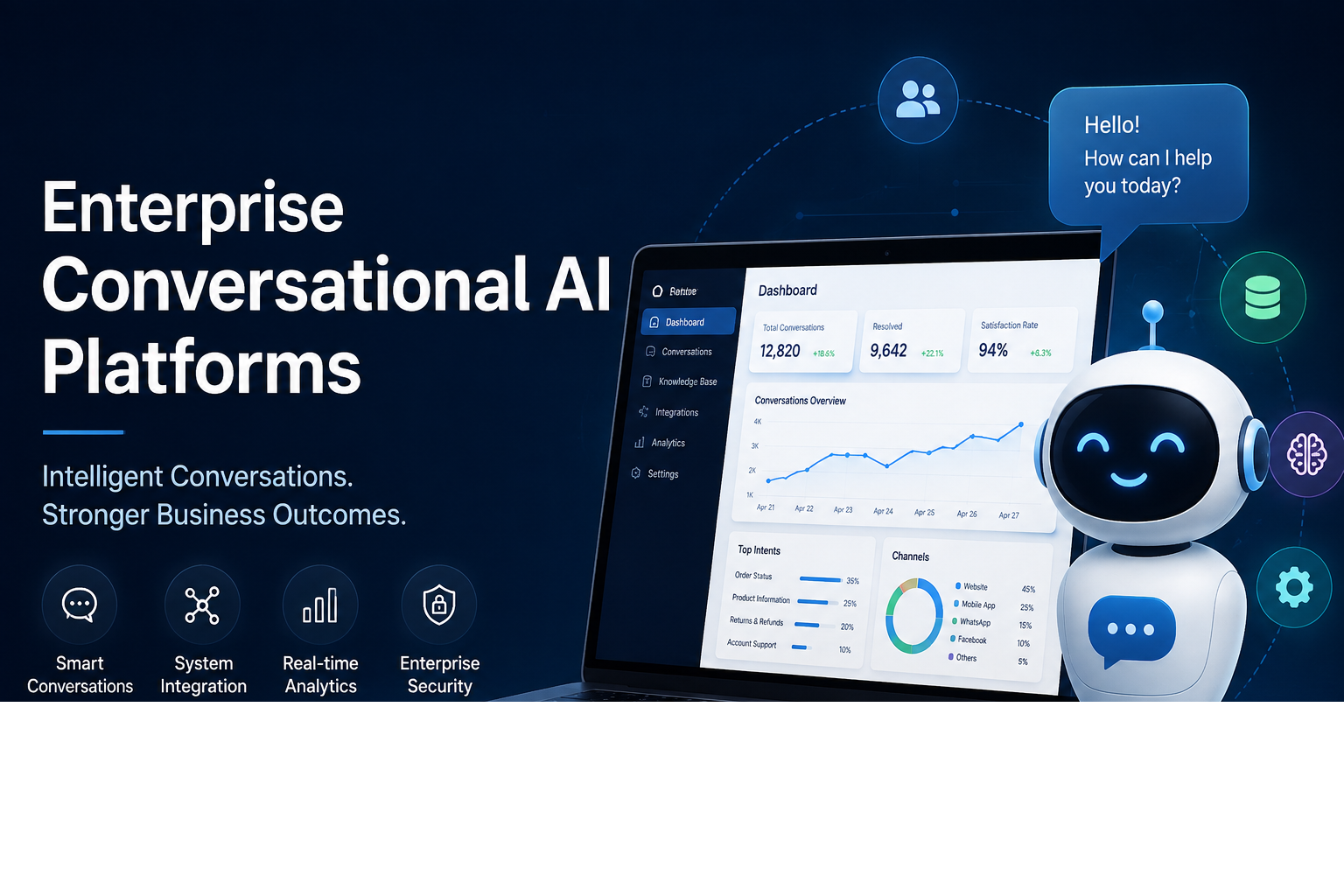
Businesses are increasingly using artificial intelligence to improve how they communicate with customers, employees, and partners. Enterprise Conversational AI Platforms provide organizations with tools to build intelligent virtual assistants, chatbots, and automated communication systems that can understand natural language and respond in a more useful way.
Unlike basic chatbots that rely on predefined answers, modern conversational AI can understand context, process different types of questions, and support more complex interactions. This makes it useful across customer service, sales, human resources, IT support, and other business functions.
What Are Enterprise Conversational AI Platforms?
Enterprise conversational AI platforms are software solutions designed to help large organizations create and manage AI-powered conversations.
These platforms can connect with business systems such as customer relationship management software, knowledge bases, help desks, and internal databases. This allows AI assistants to access relevant information and provide more personalized responses.
For example, a customer might ask about an order, while an employee could use an internal AI assistant to find company policies. The same underlying technology can support different business workflows.
Why Are Businesses Using Conversational AI?
Customer expectations have changed significantly. People increasingly expect quick answers and convenient digital communication. Businesses, meanwhile, need to handle large numbers of questions without continuously increasing support costs.
Conversational AI can help by providing assistance around the clock. It can answer common questions instantly and transfer more complicated issues to human employees when necessary.
This combination of automation and human support can create a more efficient customer experience.
Key Features
Natural Language Understanding
Modern platforms are designed to understand everyday language instead of requiring users to follow specific commands. This allows people to communicate with an AI assistant in a more natural way.
Integration With Business Systems
Enterprise AI becomes more useful when it can connect with existing business applications. Integrations with CRM, help desk, e-commerce, and knowledge management systems can allow assistants to provide information based on real business data.
Omnichannel Communication
Organizations may want to communicate with customers through websites, mobile applications, messaging services, or other digital channels. A strong platform can help manage conversations across multiple touchpoints.
Analytics and Monitoring
Businesses need to understand how AI assistants are performing. Analytics can reveal common questions, unsuccessful interactions, customer satisfaction trends, and areas where the system needs improvement.
Benefits for Enterprises
An AI assistant can handle many routine conversations simultaneously, helping businesses manage periods of high demand.
Conversational AI can also reduce repetitive work for employees. Instead of answering the same basic questions repeatedly, support teams can focus on complex problems that require human expertise.
Another benefit is consistency. AI assistants can follow defined business rules and provide standardized information across different customer interactions.
Common Business Applications
Enterprise conversational AI can be used in many departments.
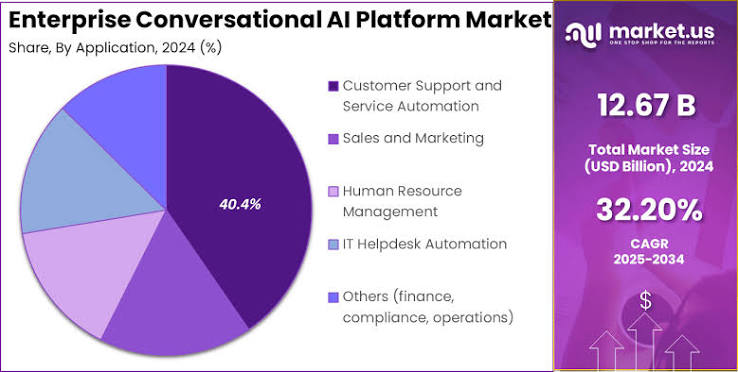
Customer service: AI assistants can answer frequently asked questions, provide order information, and guide customers through basic support processes.
Sales: Conversational tools can qualify leads, answer product questions, and help potential customers find relevant information.
Human resources: Employees can use AI assistants to find information about benefits, policies, leave procedures, and internal processes.
IT support: AI can help employees troubleshoot common technical problems and locate solutions within an organization’s knowledge base.
Challenges to Consider
Despite its advantages, conversational AI requires careful planning. Organizations need to consider data security, privacy, system integration, response accuracy, and ongoing maintenance.
AI systems can also misunderstand questions or provide incorrect information. For this reason, businesses should establish appropriate monitoring and escalation processes.
Employee training is another important factor. Staff should understand when AI should handle a request and when a conversation should be transferred to a human specialist.
The Future of Enterprise Conversational AI
Conversational AI is moving toward more capable systems that can understand context, work with business data, and complete multi-step tasks.
As AI technology develops, enterprise assistants may become less focused on simply answering questions and more capable of helping users complete actions. This could make conversational interfaces an important part of everyday business operations.
Conclusion
Enterprise Conversational AI Platforms can help organizations improve communication, automate repetitive interactions, and provide faster access to information. From customer service and sales to HR and IT support, these platforms have applications across many areas of a business.
The most effective approach is not to replace human employees entirely. Instead, businesses can use conversational AI to handle routine interactions while allowing people to concentrate on complex tasks that require experience, judgment, and empathy.
FAQ
What are Enterprise Conversational AI Platforms?
Enterprise Conversational AI Platforms are software solutions that help businesses create AI-powered chatbots and virtual assistants for customer service, sales, HR, IT support, and other operations.
How does conversational AI help businesses?
It can automate routine questions, provide faster responses, reduce repetitive work, and help employees focus on more complex tasks.
Can enterprise conversational AI integrate with existing systems?
Yes. Many platforms can integrate with CRM systems, help desks, knowledge bases, and other business applications.
Is conversational AI useful for customer service?
Yes. It can answer common questions, provide basic support, guide customers through processes, and transfer complex issues to human agents.
Artificial intelligence has moved far beyond being a futuristic idea. In 2026, AI is becoming part of everyday work, business, education and technology across the United Kingdom. From AI assistants and automated software to advanced research systems, the technology is changing how people work and how companies operate.
The UK’s growing focus on artificial intelligence is also becoming an important economic story. The government announced a £1.1 billion AI hardware plan in June 2026, including major investment in computing power and a new national AI supercomputer.
Why is AI so important in 2026?
One of the biggest changes in 2026 is that AI is moving from experimentation into practical use.
Businesses are increasingly using AI to analyse information, automate repetitive tasks, improve customer service and support employees. Instead of simply asking an AI chatbot a question, companies are beginning to use more advanced systems capable of completing specific tasks with limited human intervention.
This shift is often described as agentic AI.
AI agents can be designed to plan actions, use software tools and complete multi-step workflows. UK Research and Innovation has identified agentic AI, explainable AI, edge computing and human-in-the-loop systems among areas where the UK could develop particular strengths.
AI and UK jobs
The impact of AI on employment remains one of the biggest questions surrounding the technology.
Some companies are using AI to make existing employees more productive, while others are automating tasks that were previously performed by people. This is creating both opportunities and concerns, particularly for workers entering professional careers.
The UK government has responded by investing in AI training. In August 2026, it announced AI boot camps aimed at unemployed or at-risk young people aged 16 to 21, with training covering AI tools, workplace skills and responsible use of the technology.
The goal is not simply to teach people how to use chatbots. It is to help young workers understand how AI can be applied in real workplaces.
The UK is investing heavily in AI infrastructure
Powerful AI systems require enormous amounts of computing capacity.
That is why AI infrastructure has become almost as important as the software itself. The UK’s June announcement included £750 million for a new national AI supercomputer, including funding for next-generation chips.
This investment reflects a wider concern about technological independence. Countries increasingly want access to their own computing infrastructure rather than relying completely on overseas technology providers.
For Britain, developing stronger AI infrastructure could help universities, startups and established companies compete internationally.
AI is becoming part of the UK economy
The economic impact of AI is already becoming visible.
Recent UK economic data highlighted strong growth in information and communications industries, with AI-associated sectors such as computer programming and consultancy recording significant increases in output. Reuters reported that AI-related industries grew by 3.7% in the second quarter of 2026.
This suggests that AI is no longer simply a technology-sector story. It is increasingly connected to the wider UK economy.
Companies in finance, healthcare, manufacturing, retail and professional services are all exploring ways to use AI.
What about AI regulation?
Rapid development has also increased pressure on governments to establish clearer rules.
The UK has generally favoured a principles-based and sector-specific approach rather than relying on one comprehensive AI law. The government has also indicated that it could consider stronger regulation if voluntary safeguards are not effective enough.
Important issues include safety, transparency, privacy, copyright and accountability.
As AI becomes capable of carrying out more complex tasks, questions about who is responsible when something goes wrong are likely to become increasingly important.
What could happen next?

The next stage of AI development could focus less on chatbots and more on systems that can actually perform tasks.
AI agents could help organise business processes, analyse documents, write software, conduct research and interact with other digital systems. At the same time, companies will need stronger cybersecurity and oversight to make sure automated systems behave as intended.
The UK’s technology sector is already attracting substantial investment. Recent reporting indicates that British AI startups raised billions of dollars during the first half of 2026, highlighting London’s continued importance as an AI hub.
Final Thoughts
AI technology in 2026 is becoming more practical, more powerful and more deeply connected to everyday life.
For the UK, the opportunity is significant. Government investment in computing infrastructure, growing startup activity and increasing business adoption could strengthen Britain’s position in the global AI race.
However, technology also brings challenges. Jobs, privacy, safety and regulation will remain important issues as AI becomes capable of handling increasingly complicated tasks.
One thing is already clear: AI is no longer just a technology trend. In 2026, it is becoming an important part of the UK’s economic and technological future.


Fleet management technology is changing rapidly in 2026.
Businesses are moving beyond basic GPS tracking and adopting smarter solutions that combine telematics, artificial intelligence, video safety, predictive maintenance, asset tracking, and electric vehicle management.
For fleet operators, the right technology can improve vehicle utilization, reduce downtime, increase driver safety, and make daily operations easier to manage.
With so many providers available, understanding the companies and technologies shaping the market can help businesses make better decisions.
Why Fleet Management Technology Matters in 2026
Modern fleet management is becoming more data-driven. According to Verizon Connect’s 2026 Fleet Technology Trends Report, 80% of surveyed fleet professionals use GPS fleet tracking, while video telematics adoption has reached 46%. The report also highlights growing interest in AI-powered insights and more automated fleet decision-making.
This shift means fleet software is no longer simply showing managers where vehicles are located. It is increasingly helping them understand why something is happening and what action should be taken next.
1. Geotab
Geotab is one of the major names in connected fleet technology. Its platform focuses on telematics, vehicle tracking, driver safety, maintenance, compliance, and fleet analytics.
In 2026, the company is emphasizing AI-powered telematics and agentic AI. Its technology is moving toward providing actionable recommendations instead of simply displaying information on a dashboard.
Geotab’s 2026 telematics outlook highlights predictive operations, intelligent connectivity, EV fleet management, cybersecurity, and AI-powered decision support as important developments.
This makes Geotab a strong option for businesses managing large or mixed vehicle fleets.
2. Ramsay
Ramsay has become another important provider in connected operations and fleet management. Its technology combines vehicle tracking, driver safety, cameras, equipment monitoring, and operational data.
One of the company’s key areas is AI-powered video telematics. These systems can identify risky driving behaviors and help fleet managers provide more targeted safety coaching.
For companies looking for a platform that connects fleet visibility with safety and operational management, Ramsay remains a provider worth watching in 2026.
3. Verizon Connect
Verizon Connect continues to be a major player in GPS fleet tracking, video telematics, asset tracking, and field service management.
Its 2026 research shows that fleet technology is increasingly being used to improve safety, productivity, maintenance, and cost control. The company also points toward AI data assistants, automated insights, and agentic AI as the next stage of fleet technology.
For businesses that want established tracking technology combined with newer AI capabilities, Verizon Connect is an important name in the market.
4. Motive
Motive focuses heavily on commercial transportation and trucking. Its fleet technology brings together areas such as vehicle tracking, driver safety, compliance, and operational management.
The wider fleet industry is moving toward integrated platforms rather than separate systems for every function. This trend makes providers such as Motive increasingly relevant for transportation companies that want their fleet data and daily operations connected.
5. Trimble
Trimble is another established technology provider with a strong presence in transportation and logistics.
Its solutions are particularly relevant for businesses that need technology connected to routing, transportation workflows, fleet operations, and broader logistics management.
As fleet technology becomes more integrated, the ability to connect vehicle information with other business systems is becoming increasingly important.
Key Fleet Technology Trends in 2026
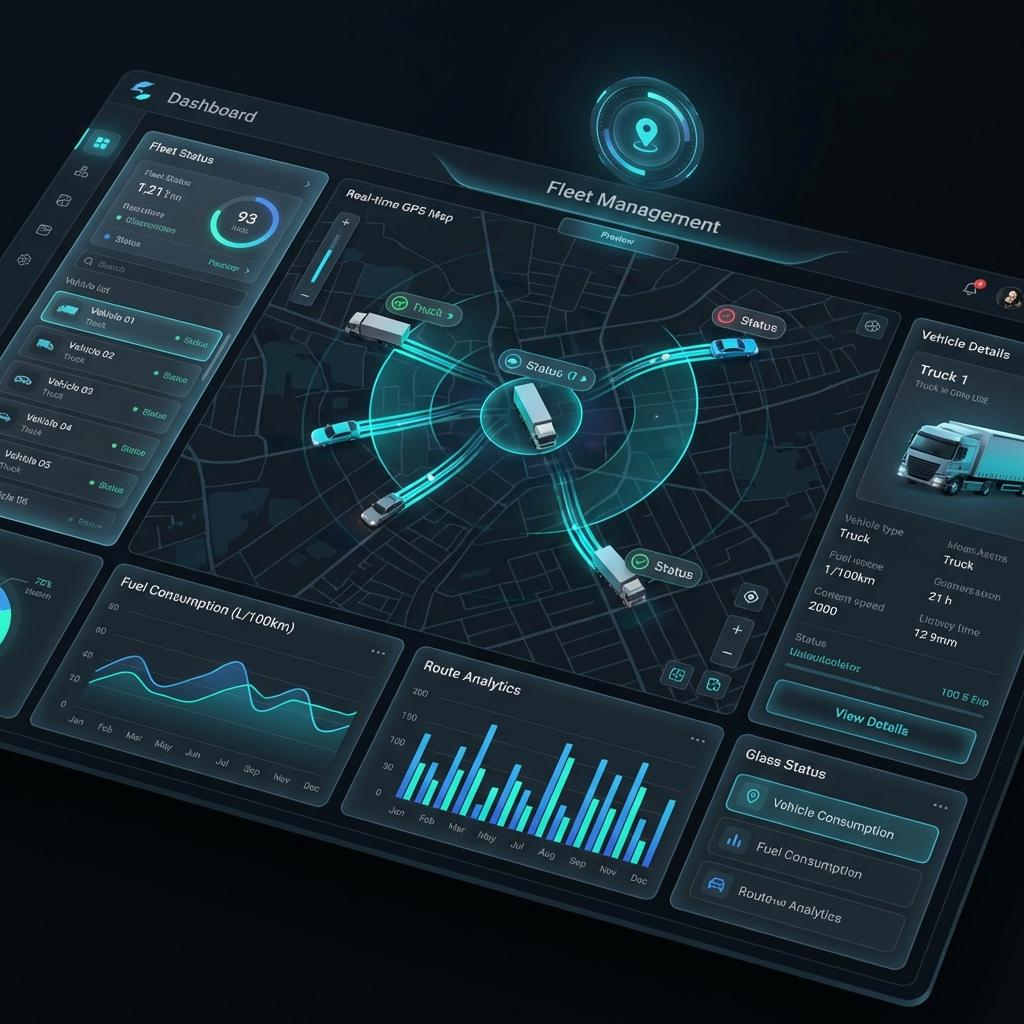
The biggest trend this year is the move from reactive fleet management to predictive fleet management.
Instead of waiting for a vehicle to break down, predictive maintenance uses vehicle data to identify potential problems earlier. This can help reduce unexpected downtime and improve vehicle availability.
AI is also becoming more useful for route optimization, driver safety, maintenance planning, and operational decision-making. Modern telematics platforms are increasingly designed to turn large amounts of vehicle data into practical recommendations.
Electric vehicles are another important consideration. Fleets adding EVs need systems that can monitor battery performance, charging, range, and utilization while also managing traditional vehicles in the same fleet.
How to Choose the Right Provider
The best fleet management technology provider depends on the company’s specific needs. Before choosing a platform, businesses should consider:
- Real-time GPS tracking
- AI-powered safety features
- Predictive maintenance
- Driver behavior monitoring
- Fuel and idle-time management
- EV and charging support
- Asset tracking
- Reporting and compliance
- Software integrations
- Data security and scalability
A provider should not be selected simply because it offers the largest number of features. The technology should solve real operational problems and provide measurable value.
Conclusion
Fleet management technology in 2026 is becoming smarter, more connected, and increasingly proactive. Companies such as Geotab, Ramsay, Verizon Connect, Motive, and Trimble are helping shape this transition.
The future of fleet management is not just about knowing where vehicles are. It is about using connected data and AI to improve safety, predict maintenance needs, reduce operating costs, and make better decisions.
For businesses planning their fleet strategy in 2026, investing in the right technology can provide more than better tracking—it can create a safer, more efficient, and future-ready fleet.
-

 Crypto3 weeks ago
Crypto Trading May Be Algorithmic in the Future, but Not Completely Autonomous
-

 Technology & AI3 months ago
Depomin82: Rethinking Digital Infrastructure for a Smarter Connected Future
-

 Fashion2 months ago
How to Build a Capsule Wardrobe on a UK Budget
-

 Business3 months ago
The Hidden Expenses in eCommerce Accounting: The Reasons Most UK Online Retailers Calculate Profit incorrectly
-

 Fashion2 months ago
Here are the Top 8 Luxury Clothing Brands in the UK for 2026
-

 Celebrity2 months ago
What is Tom Hardy’s Net Worth and Salary?
-

 Blog3 months ago
mmsbre: Reimagining Digital Connectivity in a Hyper-Intelligent World
-

 Celebrity3 months ago
Fred Dimbleby: ITV News’s Top Political Journalist and His Influence on UK Reportin