
Business
Why High-Quality Technical Drawings Are Critical for UK Construction Projects


Success begins long before the first brick is laid in the UK construction industry. Accurate technical drawings are essential for every project, whether it be a residential development, commercial structure, or industrial facility. The language that architects, engineers, contractors, and project managers all understand is technical drawings. Projects run more smoothly when these drawings are detailed and free of errors. They can cause costly delays, design conflicts, and unnecessary rework if they are inaccurate or incomplete. Because of this, putting money into quality cad drafting services in the UK is no longer a luxury; rather, it is a necessary component of delivering successful construction projects.
What Are Technical Drawings?
A construction project’s technical drawings are precise, visual documents that convey every aspect. They guide every stakeholder throughout the building process and include dimensions, materials, layouts, structural details, elevations, sections, and installation instructions. Unlike conceptual sketches, technical drawings provide exact information needed for planning approvals, construction, fabrication, and maintenance. They ensure everyone involved is working from the same set of instructions, reducing confusion and improving collaboration.
Why Accuracy Matters in UK Construction
There are multiple teams working simultaneously on construction projects. Architects design the building, structural engineers ensure stability, MEP engineers coordinate building services, contractors execute the work, and local authorities review compliance.
- A minor drafting error can quickly escalate into a costly issue.
- For instance: Material reordering may be necessary if the dimensions are incorrect.
- Misaligned structural elements can delay construction.
- Conflicts on-site may arise if building services don’t work together properly.
- Missing details can result in expensive revisions during installation.
Before construction begins, high-quality technical drawings assist in resolving these issues, saving time and money.
The Benefits of High-Quality Technical Drawings
Improved Communication
Communication between numerous professionals is essential to construction projects. Technical drawings serve as a common reference point, reducing confusion. Everyone—from architects to subcontractors—can clearly understand the design intent, reducing the need for constant clarification.
Better Project Coordination
The structural, electrical, plumbing, HVAC, and fire protection systems of modern buildings are intricate. Before work begins, these systems can be coordinated using precise technical drawings. Conflicts at the site, which frequently result in delays and raise project costs, are reduced as a result.
Faster Planning and Approvals
Professionally prepared drawings demonstrate compliance with regulations and provide the information needed for a smoother review process.
Reduced Construction Costs
Construction errors cost money. Most of the time, correcting an error during the design phase doesn’t cost much. Once construction has begun, it can cost thousands of pounds to correct the same error. Accurate technical drawings help identify problems early, reducing waste, labour costs, and material overruns.
Easier Design Changes
During their development, construction projects frequently change. Revisions are much simpler with CAD-based technical drawings than with manual drafting. Changes can be implemented quickly while maintaining consistency across all project documentation.
Supporting Compliance with UK Standards

Construction in the UK is governed by strict regulations and industry standards. When demonstrating compliance with planning requirements, Building Regulations, fire safety provisions, accessibility standards, and structural design criteria, technical drawings play an essential role. In addition to ensuring consistency with established drafting standards, well-prepared CAD drawings make it simpler for all stakeholders to accurately interpret project information.
The Role of CAD Drafting in Modern Construction
The process of creating construction drawings has been transformed by computer-aided design (CAD). CAD has a number of advantages over manual drawing:
Greater Precision
Drawings made using digital drafting software have extremely precise dimensions and consistent scaling.
Improved Collaboration
By sharing CAD files, architects, engineers, contractors, and consultants can all work with the most recent revisions.
Efficient Revisions
Without having to recreate the entire drawing set, updates can be made quickly when project requirements change.
Enhanced Documentation
Procurement, construction, upkeep, and future renovations are all made easier with well-organized documentation provided by CAD drawings. Because of these advantages, CAD drafting is now an essential component of the construction workflow.
Common Types of Technical Drawings Used in Construction
Different kinds of drawings are needed for different stages of the project.
Architectural Drawings
Floor plans, elevations, sections, roof arrangements, and the overall appearance of the building are shown here.
Structural Drawings
Structural drawings define foundations, beams, columns, reinforcement details, and load-bearing components.
Mechanical, Electrical, and Plumbing (MEP) Drawings
Building services like ventilation, electrical systems, water supply, drainage, and heating are all coordinated in MEP drawings.
Site Plans
The boundaries of the property, access roads, landscaping, utilities, and infrastructure surrounding it are depicted in site drawings. A coordinated and effective construction process is made possible by the various types of drawings.
Final Thoughts
Technical drawings of high quality are more than just project documentation; they are the basis for successful construction. They keep projects on track, streamline approvals, reduce costly errors, and improve communication. Investing in professional CAD drafting services helps developers, architects, engineers, and contractors deliver better results while minimizing risk as UK construction projects become increasingly complex. In the end, precise technical drawings not only support construction but also make it possible for it to be successful.

Revenue Cycle Management Software helps healthcare organizations manage the financial processes that connect patient care with payment. From registration and medical billing to claims processing and payment tracking, the right software can simplify complex administrative tasks and reduce avoidable delays.
Modern platforms also support claims management, insurance verification, denial tracking, and accounts receivable, giving healthcare teams better control over their revenue cycle. As healthcare billing becomes more complicated, automated tools can help improve accuracy while reducing repetitive manual work.
Effective revenue cycle management also provides valuable financial insights, allowing providers to identify payment issues and improve cash flow. With the right technology, healthcare organizations can build a more efficient, organized, and transparent billing operation.
What Is Revenue Cycle Management Software?
Revenue Cycle Management Software is a technology solution that helps healthcare providers manage the financial side of patient care. It can support the process from patient registration and insurance verification through claim submission, payment processing, and accounts receivable management.
Instead of relying on separate tools for every stage, organizations can use an integrated platform to monitor important revenue-related activities in one place.
Why Is RCM Software Important?
A healthcare revenue cycle can contain many steps, and an issue at one stage can affect the entire process. Incorrect patient information may lead to a rejected claim, while delayed follow-ups can leave payments outstanding for longer.
RCM software can help reduce these problems by organizing information and automating repetitive administrative tasks. This allows billing teams to identify issues earlier and spend more time handling cases that require human attention.
Key Features of RCM Software
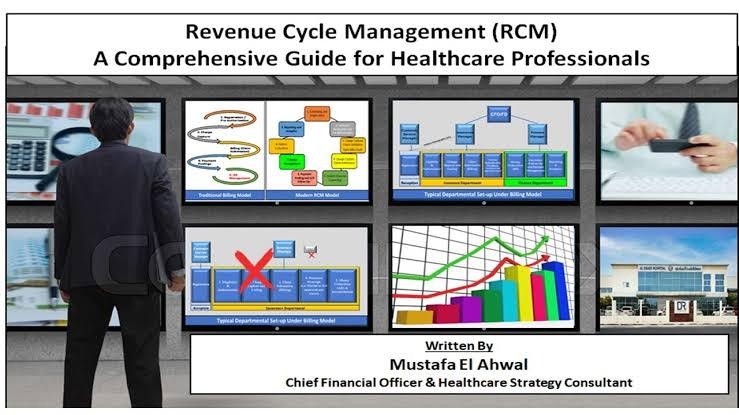
Insurance Verification
Insurance verification helps providers confirm coverage and eligibility before services are delivered. Identifying coverage problems early can reduce billing complications later.
Medical Billing
Modern platforms can organize billing information and help staff manage charges, invoices, and payment-related activities more efficiently.
Claims Management
Claims management is another important part of an RCM platform. Software can help teams prepare, submit, track, and review claims while making it easier to identify claims that require additional attention.
Denial Management
Claim denials can significantly affect cash flow. RCM software can help categorize rejected claims, monitor their status, and identify recurring reasons for denials.
Accounts Receivable Tracking
Outstanding balances need regular monitoring. Software can provide visibility into accounts receivable and help billing teams prioritize follow-ups based on the age and value of outstanding payments.
Benefits of Revenue Cycle Management Software
One major benefit is improved efficiency. Automating repetitive tasks can reduce the amount of time employees spend entering information or checking multiple systems.
Better data visibility is another advantage. Managers can use reports and dashboards to understand payment trends, claim performance, outstanding balances, and other important financial metrics.
RCM technology may also help improve cash flow by making it easier to identify delayed payments and unresolved claims.
How to Choose the Right RCM Software
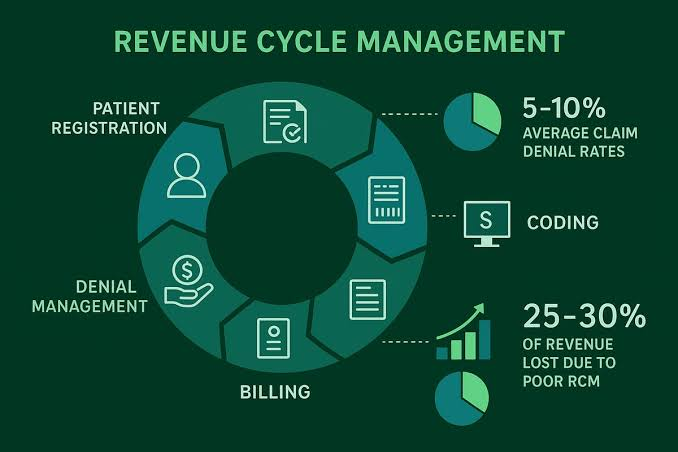
Healthcare organizations should consider their specific requirements before selecting a platform. A solution that works well for a small medical practice may not be suitable for a large hospital or multi-location healthcare organization.
Important factors include system integration, ease of use, reporting capabilities, automation features, scalability, data security, and customer support.
Integration is particularly important because RCM software may need to work alongside electronic health record systems, practice management platforms, and other healthcare technologies.
The Role of Automation
Automation is changing how healthcare organizations manage revenue cycles. Instead of requiring employees to perform every administrative step manually, software can handle repetitive workflows and provide alerts when attention is required.
This does not eliminate the need for experienced billing professionals. Instead, it allows them to focus on complicated claims, payer issues, patient communication, and other tasks where human judgment is valuable.
Future of Revenue Cycle Management
The future of RCM is likely to become increasingly data-driven. Artificial intelligence, predictive analytics, automated claim review, and intelligent reporting can help healthcare organizations identify potential problems before they affect revenue.
As healthcare payment systems continue to evolve, organizations will need technology that can adapt to changing requirements while maintaining accurate financial information.
Final Thoughts
Revenue Cycle Management Software can simplify complex healthcare financial processes by connecting billing, claims, insurance, payments, and reporting within a structured workflow. The right solution can reduce repetitive administrative work, improve visibility, and help healthcare providers manage their revenue more effectively.
For organizations considering RCM technology, the best choice is one that fits their existing workflow, integrates with other systems, supports future growth, and provides useful financial insights.
FAQ
What is Revenue Cycle Management Software?
Revenue Cycle Management Software is a healthcare technology solution that helps manage billing, insurance verification, claims, payments, and outstanding balances throughout the revenue cycle.
How does RCM software benefit healthcare providers?
It can reduce manual administrative work, improve billing accuracy, track claims, manage denials, and provide better visibility into outstanding payments.
Can RCM software reduce claim denials?
Yes. It can help identify missing or incorrect information before claims are submitted and track denied claims so billing teams can address them more efficiently.
Is RCM software suitable for small medical practices?
Yes. Many RCM solutions are designed for different organization sizes, including small practices, clinics, hospitals, and larger healthcare networks.

E-commerce has changed the way businesses sell products and how customers receive them. As online shopping continues to grow, packaging has become an essential part of the buying journey rather than simply a way to protect products.
Every order must be packed carefully enough to survive storage, transportation, and delivery while remaining practical and affordable for businesses. This growing demand is encouraging the packaging industry to develop smarter and more efficient solutions. From sustainable packaging and recyclable materials to shipping boxes and customised designs, brands are rethinking how products reach consumers.
At the same time, modern online shopping expectations are pushing companies toward packaging that combines protection, convenience, sustainability, and a better customer experience.
The Rise of Packaging Designed for Shipping
Traditional retail packaging was mainly designed to look attractive on a store shelf. E-commerce packaging has a different job. A parcel may pass through warehouses, delivery vehicles, sorting centres, and multiple handling points before reaching the customer.
This has increased demand for packaging that provides strong protection without adding unnecessary weight or size. Companies are increasingly using durable cardboard boxes, protective inserts, padded mailers, and custom-fit packaging to reduce product damage during transportation.
At the same time, businesses are trying to avoid oversized boxes. A package that is much larger than the product takes up more space in delivery vehicles and warehouses. Right-sized packaging can therefore help companies improve logistics efficiency while reducing material consumption.
Sustainability Is Becoming a Major Priority
One of the biggest changes created by e-commerce is the growing focus on sustainable packaging. Online shopping can generate significant amounts of cardboard, plastic, protective materials, and other packaging waste. Consumers are becoming more conscious of this problem and increasingly expect brands to take responsibility.
This has encouraged businesses to explore recyclable, reusable, compostable, and biodegradable materials. Recycled cardboard and paper-based packaging are becoming popular alternatives in many industries. Some companies are also reducing plastic components and replacing unnecessary layers of packaging.
However, sustainability is not simply about replacing one material with another. Brands are also examining the entire packaging process, including manufacturing, transportation, storage, and disposal. The goal is to create packaging that provides protection while using fewer resources.
Packaging Has Become Part of the Customer Experience

In e-commerce, packaging can also act as a physical connection between a customer and an online brand. Since shoppers cannot see the product on a store shelf before buying it, the delivery experience can influence how they perceive the company.
This has led to the popularity of attractive branded boxes, personalised messages, creative opening experiences, and carefully arranged products. For premium brands, packaging can help communicate quality and exclusivity.
Even smaller online businesses can use packaging to strengthen their identity. A distinctive box, printed tissue paper, or simple thank-you card can make an order feel more personal. Customers may also share interesting packaging experiences on social media, giving brands additional exposure.
Smart Packaging Is Gaining Attention
Technology is another factor influencing the packaging industry. Smart packaging can include QR codes, tracking features, digital product information, authentication systems, and interactive elements.
For example, a QR code on a package can take customers directly to product instructions, warranty information, recycling guidance, or a brand’s website. In some industries, technology can also help companies monitor products during transportation.
These developments are particularly useful for businesses selling expensive, sensitive, or specialised products. As e-commerce becomes increasingly digital, packaging is also becoming more connected to the digital customer journey.
Returns Are Changing Packaging Design
Returns are a major part of online shopping, especially in fashion, electronics, and other consumer categories. This has created another challenge for packaging manufacturers.
Packaging now needs to protect products not only during the original delivery but potentially during a return journey as well. Easy-open and resealable designs can make the process simpler for customers while reducing the need for additional packaging.
Reusable packaging systems are also receiving greater attention. Instead of treating a box or mailer as something that is used once and discarded, businesses can design packaging that can be used multiple times.
Automation Is Reshaping Packaging Operations

The growth of online orders has also encouraged warehouses to become more automated. Packaging equipment can measure products, select suitable box sizes, apply labels, and prepare orders at high speed.
Automation allows businesses to process large numbers of orders while maintaining consistency. It can also reduce packaging errors and help companies control material usage.
For large e-commerce operations, efficient packaging is closely connected to delivery speed. The faster an order can move from warehouse shelves to a shipping vehicle, the easier it becomes for businesses to meet customer expectations.
The Future of E-commerce Packaging
The relationship between e-commerce and packaging will continue to evolve. Future packaging is likely to focus on three major areas: efficiency, sustainability, and experience.
Companies will look for ways to use fewer materials without compromising product protection. Packaging may become more reusable and easier to recycle. At the same time, digital technology could make packages more interactive and useful.
The biggest change is that packaging is no longer viewed simply as a container. In the e-commerce economy, it is part of logistics, branding, sustainability, customer service, and product protection.
Ultimately, the growth of online shopping is pushing the packaging industry to become more innovative. Businesses that can combine practical protection with sustainable materials and memorable customer experiences will be better positioned to meet the expectations of the modern e-commerce market.
FAQs
1. How is e-commerce changing the packaging industry?
E-commerce is increasing demand for lightweight, durable, sustainable, and easy-to-handle packaging that can protect products throughout the delivery process.
2. Why is sustainable packaging important for e-commerce?
Sustainable packaging helps businesses reduce waste, lower material consumption, and meet growing consumer expectations for environmentally responsible products.
3. What type of packaging is commonly used for e-commerce?
Common options include cardboard boxes, padded mailers, paper-based packaging, protective inserts, and custom-sized shipping containers.
4. How does packaging affect the customer experience?
Well-designed packaging can make products feel more premium, protect them from damage, and create a positive first impression when customers receive their orders.
5. Will e-commerce packaging become more eco-friendly?
Yes. As businesses and consumers focus more on reducing waste, the industry is expected to adopt more recyclable, reusable, and resource-efficient packaging solutions.

Artificial intelligence is becoming more useful for small businesses in 2026. While many companies started with simple AI chatbots and content-generation tools, the next development is AI agents—systems designed to handle tasks, use digital tools and work towards a specific goal.
For small businesses, this could be particularly important because AI agents may help reduce repetitive work without requiring a large team. The UK Competition and Markets Authority says agentic AI can potentially plan, coordinate and take actions across different services, although many current implementations remain limited and operate with human oversight.
What are AI agents?
An AI agent is a software system that can take a goal and work through several steps to achieve it.
A traditional chatbot might answer a customer’s question and leave the business owner to complete the next step.
The difference is action.
They can potentially interact with websites, databases, business software and other digital tools to complete parts of a workflow. The UK’s AI Security Institute has found a growing ecosystem of agent tools capable of actions such as browsing websites, executing code and interacting with external systems.
Why are AI agents important for small businesses?
Small businesses often have limited time and staff.
An owner might spend hours every week answering similar emails, organising appointments, checking enquiries, updating spreadsheets or following up with customers.
These tasks may not require complex human judgement, but they can still take valuable time.
An AI agent could potentially handle parts of these repetitive workflows while allowing employees to focus on customers, strategy and other work that requires human involvement.
The UK government is actively encouraging businesses to move beyond basic AI use and explore ways technology can transform workflows, products and business models.
How could a small business use an AI agent?
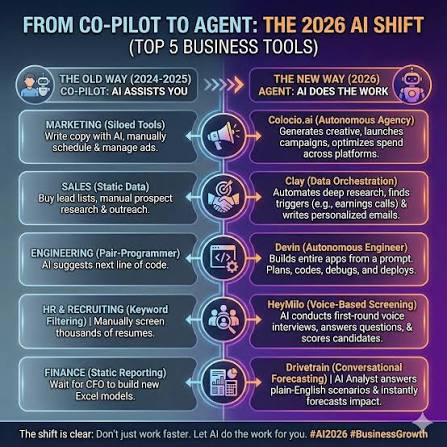
There are several practical possibilities.
Customer service
An AI agent could answer common customer questions, search a company’s approved information and escalate unusual cases to a human employee.
Appointment management
For businesses that rely on appointments, an AI system could potentially help manage enquiries, check availability and organise bookings.
Lead follow-up
An agent could identify new enquiries, collect basic information and send an appropriate follow-up message before passing the lead to a member of staff.
Document processing
Businesses receive invoices, forms, orders and other documents every day. AI agents can potentially extract information and transfer it into other systems, reducing manual data entry.
Internal administration
An agent could help organise information, create reports or coordinate repetitive tasks across different software platforms.
These examples are most suitable when the workflow is clearly defined and the business can monitor what the system is doing.
AI agents are not the same as AI chatbots
The terms are sometimes used interchangeably, but there is an important difference.
A chatbot generally responds to a user’s prompt. An AI agent is designed to pursue a goal through multiple steps.
For example:
Chatbot: “Here is a draft reply to your customer.”
AI agent: “I checked the customer record, reviewed the relevant information, prepared the response and sent it according to the approved workflow.”
The second example involves multiple actions rather than simply generating an answer.
However, not every product marketed as an “AI agent” is fully autonomous. The CMA notes that current consumer-facing implementations are generally bounded, with human escalation still common.
What are the risks for small businesses?
AI agents can create new risks because they may have access to business systems and information.
An incorrect decision that stays inside a chatbot conversation may be relatively easy to correct. An incorrect action taken by an AI agent could potentially affect a customer, order, payment or business record.
That is why businesses need clear permissions, monitoring and human oversight.
The UK’s National Cyber Security Centre recommends understanding dependencies, monitoring agent behaviour, threat-modelling deployments and preparing for failures or misuse. It also recommends starting small and building security and governance into the deployment from the beginning.
Businesses also remain responsible for complying with consumer protection law when using AI agents. The CMA specifically advises companies to tell customers when they use an AI agent, train the system appropriately and monitor its performance.
Should every small business use AI agents in 2026?
No.
The best starting point is not to automate everything. Instead, businesses should identify one repetitive, low-risk task where automation could genuinely save time.
For example, a company could begin with handling frequently asked questions or organising internal documents. Once the workflow works reliably, it may be possible to expand into more complicated processes.
This approach is safer and more practical than giving an AI system unrestricted access to important business operations.
What is the future of AI agents?
AI agents are likely to become more common as businesses become more comfortable connecting AI systems with their existing software.
The UK is already treating agentic AI as an important part of its technology landscape. Government research highlights potential benefits including productivity improvements, while also recognising concerns around transparency, accountability, security and consumer protection.
For small businesses, the biggest opportunity may not be replacing employees. It could be giving a small team the ability to accomplish more with the same amount of time.
Final Thoughts
AI agents for small businesses in 2026 represent an important change in how companies can use artificial intelligence.
Instead of simply asking AI to create an answer, businesses can increasingly explore systems that help complete multi-step tasks. Customer service, administration, lead management and document processing are among the areas where this technology could provide practical benefits.
But successful adoption requires caution. Businesses should start with simple workflows, limit permissions, monitor performance and keep humans involved when decisions have significant consequences.
The future of AI for small businesses may therefore be less about replacing people and more about giving people smarter digital assistance to get everyday work done.
-

 Crypto3 weeks ago
Crypto Trading May Be Algorithmic in the Future, but Not Completely Autonomous
-

 Technology & AI3 months ago
Depomin82: Rethinking Digital Infrastructure for a Smarter Connected Future
-

 Fashion2 months ago
How to Build a Capsule Wardrobe on a UK Budget
-

 Business3 months ago
The Hidden Expenses in eCommerce Accounting: The Reasons Most UK Online Retailers Calculate Profit incorrectly
-

 Fashion2 months ago
Here are the Top 8 Luxury Clothing Brands in the UK for 2026
-

 Celebrity2 months ago
What is Tom Hardy’s Net Worth and Salary?
-

 Blog3 months ago
mmsbre: Reimagining Digital Connectivity in a Hyper-Intelligent World
-

 Celebrity3 months ago
Fred Dimbleby: ITV News’s Top Political Journalist and His Influence on UK Reportin