
Technology & AI
Top Android App Development Companies:


Finding the finest Android app development company is harder than it should be. Every business says it’s the “best.” Every website has the same bullet points, Agile process, prompt delivery, and client-first mindset. Everything becomes blurry after a time.
Before arranging the information in a way that truly helps you make a choice, we considered Clutch evaluations, Good Firms ratings, portfolio depth, tech stack depth, client feedback, and industry specializations. Whether you’re modernizing an antiquated system, expanding a corporate platform, or creating a startup MVP, this list offers the perfect partner for you.
What is an Android app developer?
The majority of an Android developer’s work entails producing apps for the Android marketplace.
Android developers can work for an app development firm or internally for a large organization. Although it’s not always the case, companies typically prefer candidates with a bachelor’s degree in software development for this entry-level, skilled role.
Your main duties are as follows: Fixing bugs and improving the performance of an app
creating innovative platform applications Code that is unit-tested for usability, edge cases, and general dependability
To make development run as smoothly as possible, find and use new technologies.

How We Selected These Companies
Expensive errors occur when a development partner is chosen based on a Google search or an eye-catching website.
Technical Expertise
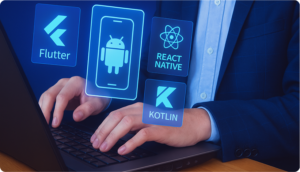
Each company’s use of Kotlin, Jetpack Compose, and contemporary Android architecture standards was confirmed. A business that still uses outdated Java failed in the absence of a Kotlin roadmap. Flutter or React Native’s cross-platform functionality was also evaluated, since the majority of businesses nowadays require coverage for both iOS and Android without having to manage two different teams.
Portfolio Strength
The Android OS is updated often, and unmaintained apps eventually become insecure or incompatible. We searched for businesses who provide a PDF documentation and regard post-launch health as a continuous commitment rather than an afterthought.
Verified Client Reviews
Manufacturing star ratings is easy. We studied the complete narrative reviews of Clutch, GoodFirms, and The Manifest, paying particular attention to those that discussed scope modifications, delays, or difficulties encountered in the middle of the project. How a business manages challenges can reveal a lot more about it than how well it runs.
Post-Launch Support
The Android OS is updated often, and unmaintained apps eventually become insecure or incompatible. We searched for businesses who provide a PDF documentation and regard post-launch health as a continuous commitment rather than an afterthought.
Advantages of Hiring Android App Developers in 2026
Your mobile product may succeed or fail depending on the Android development partner you choose. These are the regular benefits that companies receive by collaborating with a reputable development firm.
| Benefit | Description |
| Access to Skilled Developers | Leading companies provide skilled developers with expertise in Flutter, Jetpack Compose, Kotlin, and AI/ML frameworks. |
| AI-First Development | Businesses like TechnoYuga include voice recognition, personalization, automation, predictive analytics, and AI from the very beginning. |
| Cost-Effective Solutions | At a fraction of US or European agency charges ($10–$60/hour vs. $120–$180/hour), Indian development organizations provide top-notch Android knowledge. |
| Faster Time to Market | Businesses can launch more quickly without sacrificing quality thanks to agile sprint structures and dedicated team models. |
| End-to-End Services | UI/UX design, development, QA testing, deployment, and post-launch maintenance are all handled by top companies. |
Key Android Technologies to Know in 2026
| Technology | Why It Matters |
| Kotlin | More than 60% of professional Android developers use Google’s official recommended language. null-safe, succinct, and modern. |
| Jetpack Compose | More than 60% of the most popular Play Store apps, such as Dropbox, Hotstar, and Airbnb, employ Android’s declarative UI framework. |
| Flutter | Google’s cross-platform framework reduces development time by 30–40% by building iOS and Android from a single codebase. |
| Kotlin Multiplatform (KMP) | maintains native user interfaces while sharing business logic between iOS and Android. Fintech and enterprise SaaS are expanding quickly. |
| AI / ML Integration | Competitive Android apps now come equipped with voice recognition, intelligent customisation, and predictive analytics. |
Wrap Up
In conclusion, Android development is more inventive and competitive than it has ever been in 2026. These businesses have been acknowledged for their capacity to provide excellent customer service, technical proficiency, and industry execution.
Whether you want to build an MVP, expand an enterprise platform, or implement an AI-driven mobile experience, choosing a development partner entails taking your business goals, budget, product details, and future vision into account.
In addition to coding, today’s top development teams help companies expand more quickly, improve user experiences, and produce goods that remain competitive in the ever-changing mobile market.
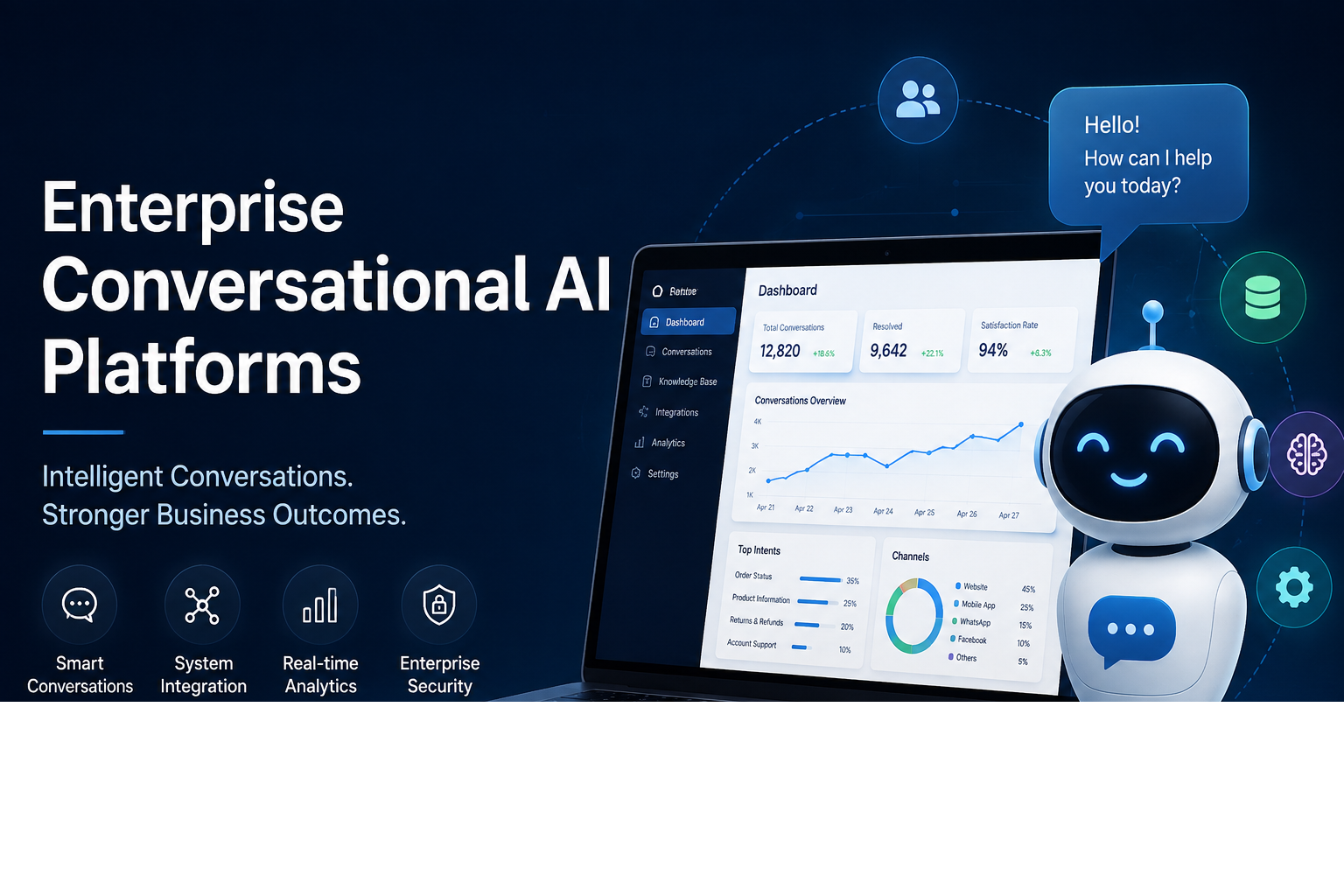
Businesses are increasingly using artificial intelligence to improve how they communicate with customers, employees, and partners. Enterprise Conversational AI Platforms provide organizations with tools to build intelligent virtual assistants, chatbots, and automated communication systems that can understand natural language and respond in a more useful way.
Unlike basic chatbots that rely on predefined answers, modern conversational AI can understand context, process different types of questions, and support more complex interactions. This makes it useful across customer service, sales, human resources, IT support, and other business functions.
What Are Enterprise Conversational AI Platforms?
Enterprise conversational AI platforms are software solutions designed to help large organizations create and manage AI-powered conversations.
These platforms can connect with business systems such as customer relationship management software, knowledge bases, help desks, and internal databases. This allows AI assistants to access relevant information and provide more personalized responses.
For example, a customer might ask about an order, while an employee could use an internal AI assistant to find company policies. The same underlying technology can support different business workflows.
Why Are Businesses Using Conversational AI?
Customer expectations have changed significantly. People increasingly expect quick answers and convenient digital communication. Businesses, meanwhile, need to handle large numbers of questions without continuously increasing support costs.
Conversational AI can help by providing assistance around the clock. It can answer common questions instantly and transfer more complicated issues to human employees when necessary.
This combination of automation and human support can create a more efficient customer experience.
Key Features
Natural Language Understanding
Modern platforms are designed to understand everyday language instead of requiring users to follow specific commands. This allows people to communicate with an AI assistant in a more natural way.
Integration With Business Systems
Enterprise AI becomes more useful when it can connect with existing business applications. Integrations with CRM, help desk, e-commerce, and knowledge management systems can allow assistants to provide information based on real business data.
Omnichannel Communication
Organizations may want to communicate with customers through websites, mobile applications, messaging services, or other digital channels. A strong platform can help manage conversations across multiple touchpoints.
Analytics and Monitoring
Businesses need to understand how AI assistants are performing. Analytics can reveal common questions, unsuccessful interactions, customer satisfaction trends, and areas where the system needs improvement.
Benefits for Enterprises
An AI assistant can handle many routine conversations simultaneously, helping businesses manage periods of high demand.
Conversational AI can also reduce repetitive work for employees. Instead of answering the same basic questions repeatedly, support teams can focus on complex problems that require human expertise.
Another benefit is consistency. AI assistants can follow defined business rules and provide standardized information across different customer interactions.
Common Business Applications
Enterprise conversational AI can be used in many departments.
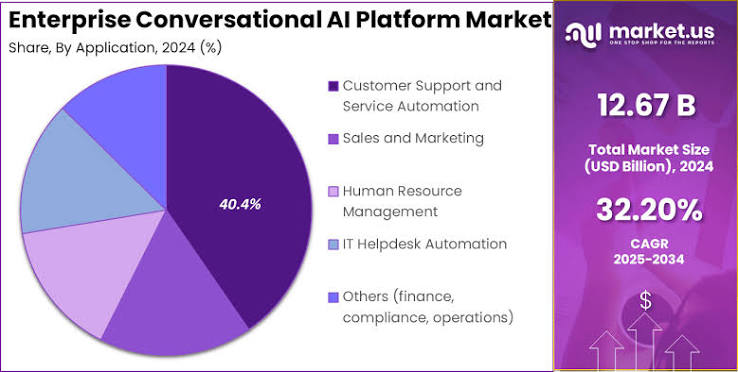
Customer service: AI assistants can answer frequently asked questions, provide order information, and guide customers through basic support processes.
Sales: Conversational tools can qualify leads, answer product questions, and help potential customers find relevant information.
Human resources: Employees can use AI assistants to find information about benefits, policies, leave procedures, and internal processes.
IT support: AI can help employees troubleshoot common technical problems and locate solutions within an organization’s knowledge base.
Challenges to Consider
Despite its advantages, conversational AI requires careful planning. Organizations need to consider data security, privacy, system integration, response accuracy, and ongoing maintenance.
AI systems can also misunderstand questions or provide incorrect information. For this reason, businesses should establish appropriate monitoring and escalation processes.
Employee training is another important factor. Staff should understand when AI should handle a request and when a conversation should be transferred to a human specialist.
The Future of Enterprise Conversational AI
Conversational AI is moving toward more capable systems that can understand context, work with business data, and complete multi-step tasks.
As AI technology develops, enterprise assistants may become less focused on simply answering questions and more capable of helping users complete actions. This could make conversational interfaces an important part of everyday business operations.
Conclusion
Enterprise Conversational AI Platforms can help organizations improve communication, automate repetitive interactions, and provide faster access to information. From customer service and sales to HR and IT support, these platforms have applications across many areas of a business.
The most effective approach is not to replace human employees entirely. Instead, businesses can use conversational AI to handle routine interactions while allowing people to concentrate on complex tasks that require experience, judgment, and empathy.
FAQ
What are Enterprise Conversational AI Platforms?
Enterprise Conversational AI Platforms are software solutions that help businesses create AI-powered chatbots and virtual assistants for customer service, sales, HR, IT support, and other operations.
How does conversational AI help businesses?
It can automate routine questions, provide faster responses, reduce repetitive work, and help employees focus on more complex tasks.
Can enterprise conversational AI integrate with existing systems?
Yes. Many platforms can integrate with CRM systems, help desks, knowledge bases, and other business applications.
Is conversational AI useful for customer service?
Yes. It can answer common questions, provide basic support, guide customers through processes, and transfer complex issues to human agents.
Artificial intelligence has moved far beyond being a futuristic idea. In 2026, AI is becoming part of everyday work, business, education and technology across the United Kingdom. From AI assistants and automated software to advanced research systems, the technology is changing how people work and how companies operate.
The UK’s growing focus on artificial intelligence is also becoming an important economic story. The government announced a £1.1 billion AI hardware plan in June 2026, including major investment in computing power and a new national AI supercomputer.
Why is AI so important in 2026?
One of the biggest changes in 2026 is that AI is moving from experimentation into practical use.
Businesses are increasingly using AI to analyse information, automate repetitive tasks, improve customer service and support employees. Instead of simply asking an AI chatbot a question, companies are beginning to use more advanced systems capable of completing specific tasks with limited human intervention.
This shift is often described as agentic AI.
AI agents can be designed to plan actions, use software tools and complete multi-step workflows. UK Research and Innovation has identified agentic AI, explainable AI, edge computing and human-in-the-loop systems among areas where the UK could develop particular strengths.
AI and UK jobs
The impact of AI on employment remains one of the biggest questions surrounding the technology.
Some companies are using AI to make existing employees more productive, while others are automating tasks that were previously performed by people. This is creating both opportunities and concerns, particularly for workers entering professional careers.
The UK government has responded by investing in AI training. In August 2026, it announced AI boot camps aimed at unemployed or at-risk young people aged 16 to 21, with training covering AI tools, workplace skills and responsible use of the technology.
The goal is not simply to teach people how to use chatbots. It is to help young workers understand how AI can be applied in real workplaces.
The UK is investing heavily in AI infrastructure
Powerful AI systems require enormous amounts of computing capacity.
That is why AI infrastructure has become almost as important as the software itself. The UK’s June announcement included £750 million for a new national AI supercomputer, including funding for next-generation chips.
This investment reflects a wider concern about technological independence. Countries increasingly want access to their own computing infrastructure rather than relying completely on overseas technology providers.
For Britain, developing stronger AI infrastructure could help universities, startups and established companies compete internationally.
AI is becoming part of the UK economy
The economic impact of AI is already becoming visible.
Recent UK economic data highlighted strong growth in information and communications industries, with AI-associated sectors such as computer programming and consultancy recording significant increases in output. Reuters reported that AI-related industries grew by 3.7% in the second quarter of 2026.
This suggests that AI is no longer simply a technology-sector story. It is increasingly connected to the wider UK economy.
Companies in finance, healthcare, manufacturing, retail and professional services are all exploring ways to use AI.
What about AI regulation?
Rapid development has also increased pressure on governments to establish clearer rules.
The UK has generally favoured a principles-based and sector-specific approach rather than relying on one comprehensive AI law. The government has also indicated that it could consider stronger regulation if voluntary safeguards are not effective enough.
Important issues include safety, transparency, privacy, copyright and accountability.
As AI becomes capable of carrying out more complex tasks, questions about who is responsible when something goes wrong are likely to become increasingly important.
What could happen next?

The next stage of AI development could focus less on chatbots and more on systems that can actually perform tasks.
AI agents could help organise business processes, analyse documents, write software, conduct research and interact with other digital systems. At the same time, companies will need stronger cybersecurity and oversight to make sure automated systems behave as intended.
The UK’s technology sector is already attracting substantial investment. Recent reporting indicates that British AI startups raised billions of dollars during the first half of 2026, highlighting London’s continued importance as an AI hub.
Final Thoughts
AI technology in 2026 is becoming more practical, more powerful and more deeply connected to everyday life.
For the UK, the opportunity is significant. Government investment in computing infrastructure, growing startup activity and increasing business adoption could strengthen Britain’s position in the global AI race.
However, technology also brings challenges. Jobs, privacy, safety and regulation will remain important issues as AI becomes capable of handling increasingly complicated tasks.
One thing is already clear: AI is no longer just a technology trend. In 2026, it is becoming an important part of the UK’s economic and technological future.


Fleet management technology is changing rapidly in 2026.
Businesses are moving beyond basic GPS tracking and adopting smarter solutions that combine telematics, artificial intelligence, video safety, predictive maintenance, asset tracking, and electric vehicle management.
For fleet operators, the right technology can improve vehicle utilization, reduce downtime, increase driver safety, and make daily operations easier to manage.
With so many providers available, understanding the companies and technologies shaping the market can help businesses make better decisions.
Why Fleet Management Technology Matters in 2026
Modern fleet management is becoming more data-driven. According to Verizon Connect’s 2026 Fleet Technology Trends Report, 80% of surveyed fleet professionals use GPS fleet tracking, while video telematics adoption has reached 46%. The report also highlights growing interest in AI-powered insights and more automated fleet decision-making.
This shift means fleet software is no longer simply showing managers where vehicles are located. It is increasingly helping them understand why something is happening and what action should be taken next.
1. Geotab
Geotab is one of the major names in connected fleet technology. Its platform focuses on telematics, vehicle tracking, driver safety, maintenance, compliance, and fleet analytics.
In 2026, the company is emphasizing AI-powered telematics and agentic AI. Its technology is moving toward providing actionable recommendations instead of simply displaying information on a dashboard.
Geotab’s 2026 telematics outlook highlights predictive operations, intelligent connectivity, EV fleet management, cybersecurity, and AI-powered decision support as important developments.
This makes Geotab a strong option for businesses managing large or mixed vehicle fleets.
2. Ramsay
Ramsay has become another important provider in connected operations and fleet management. Its technology combines vehicle tracking, driver safety, cameras, equipment monitoring, and operational data.
One of the company’s key areas is AI-powered video telematics. These systems can identify risky driving behaviors and help fleet managers provide more targeted safety coaching.
For companies looking for a platform that connects fleet visibility with safety and operational management, Ramsay remains a provider worth watching in 2026.
3. Verizon Connect
Verizon Connect continues to be a major player in GPS fleet tracking, video telematics, asset tracking, and field service management.
Its 2026 research shows that fleet technology is increasingly being used to improve safety, productivity, maintenance, and cost control. The company also points toward AI data assistants, automated insights, and agentic AI as the next stage of fleet technology.
For businesses that want established tracking technology combined with newer AI capabilities, Verizon Connect is an important name in the market.
4. Motive
Motive focuses heavily on commercial transportation and trucking. Its fleet technology brings together areas such as vehicle tracking, driver safety, compliance, and operational management.
The wider fleet industry is moving toward integrated platforms rather than separate systems for every function. This trend makes providers such as Motive increasingly relevant for transportation companies that want their fleet data and daily operations connected.
5. Trimble
Trimble is another established technology provider with a strong presence in transportation and logistics.
Its solutions are particularly relevant for businesses that need technology connected to routing, transportation workflows, fleet operations, and broader logistics management.
As fleet technology becomes more integrated, the ability to connect vehicle information with other business systems is becoming increasingly important.
Key Fleet Technology Trends in 2026
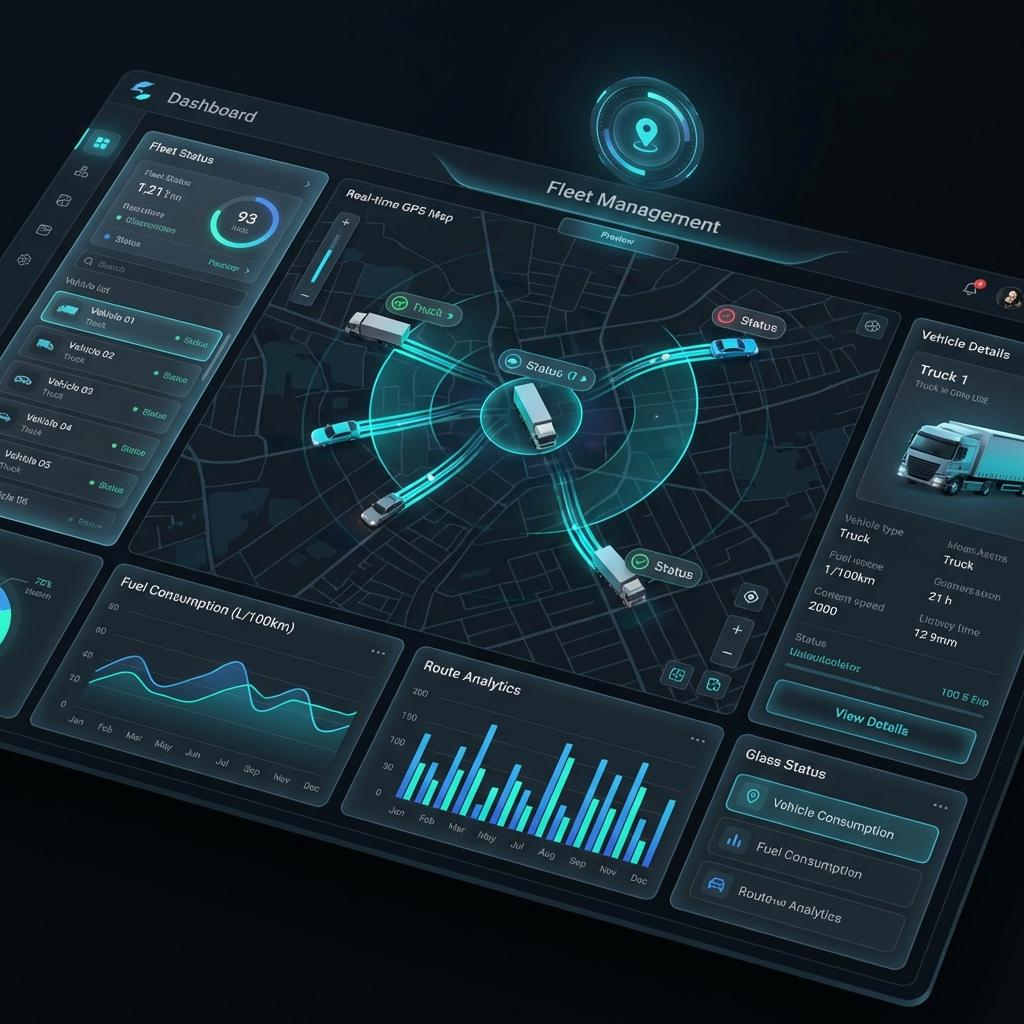
The biggest trend this year is the move from reactive fleet management to predictive fleet management.
Instead of waiting for a vehicle to break down, predictive maintenance uses vehicle data to identify potential problems earlier. This can help reduce unexpected downtime and improve vehicle availability.
AI is also becoming more useful for route optimization, driver safety, maintenance planning, and operational decision-making. Modern telematics platforms are increasingly designed to turn large amounts of vehicle data into practical recommendations.
Electric vehicles are another important consideration. Fleets adding EVs need systems that can monitor battery performance, charging, range, and utilization while also managing traditional vehicles in the same fleet.
How to Choose the Right Provider
The best fleet management technology provider depends on the company’s specific needs. Before choosing a platform, businesses should consider:
- Real-time GPS tracking
- AI-powered safety features
- Predictive maintenance
- Driver behavior monitoring
- Fuel and idle-time management
- EV and charging support
- Asset tracking
- Reporting and compliance
- Software integrations
- Data security and scalability
A provider should not be selected simply because it offers the largest number of features. The technology should solve real operational problems and provide measurable value.
Conclusion
Fleet management technology in 2026 is becoming smarter, more connected, and increasingly proactive. Companies such as Geotab, Ramsay, Verizon Connect, Motive, and Trimble are helping shape this transition.
The future of fleet management is not just about knowing where vehicles are. It is about using connected data and AI to improve safety, predict maintenance needs, reduce operating costs, and make better decisions.
For businesses planning their fleet strategy in 2026, investing in the right technology can provide more than better tracking—it can create a safer, more efficient, and future-ready fleet.
-

 Technology & AI3 months ago
Depomin82: Rethinking Digital Infrastructure for a Smarter Connected Future
-

 Crypto3 weeks ago
Crypto Trading May Be Algorithmic in the Future, but Not Completely Autonomous
-

 Fashion2 months ago
How to Build a Capsule Wardrobe on a UK Budget
-

 Business3 months ago
The Hidden Expenses in eCommerce Accounting: The Reasons Most UK Online Retailers Calculate Profit incorrectly
-

 Fashion2 months ago
Here are the Top 8 Luxury Clothing Brands in the UK for 2026
-

 Celebrity2 months ago
What is Tom Hardy’s Net Worth and Salary?
-

 Blog3 months ago
mmsbre: Reimagining Digital Connectivity in a Hyper-Intelligent World
-

 Celebrity3 months ago
Fred Dimbleby: ITV News’s Top Political Journalist and His Influence on UK Reportin