
Technology & AI
10 Tips to Improve Network Speed and Reliability


For work, school, entertainment, and staying connected, a fast and dependable internet connection is now essential. However, many people don’t know why they experience buffering, connection drops, or slow speeds. Fortunately, rather than costly upgrades, enhancing your network typically requires only a few practical modifications. From optimizing your router’s placement to managing connected devices and maintaining your equipment, this guide explores straightforward and efficient methods for increasing network speed and reliability. You can have a stronger, more stable connection and keep your home or office network running at its best by following these helpful hints.
Essential Strategies for Faster Internet Right Away
Most of the time, a faster connection starts with things you can actually see, like where your router is, whether it’s up to date, and how old your equipment is. Take a quick look around your space before you call your service provider and put yourself on hold. Slowdowns can sneak up on small offices, clinics, homes, and schools. Network performance monitoring tools can help show when trouble started, where it happened, and what might be causing it if you’re tired of guessing.
-
Position Your Router for Maximum Signal Strength
Space is needed for your router to breathe. Place it as close to the center of your space as you can, but don’t stuff it behind the TV, put it in a cabinet, or leave it on the floor next to a mess of cords. Height also helps. The signal can be spread out more evenly with a tall piece of furniture, wall mount, or shelf. Even though it’s a small change, it can sometimes make a big difference.
-
Update Router Firmware for Better Stability
The software that runs on your router is called router firmware. Even though it’s not exciting, it matters. Your router can handle multiple phones, laptops, televisions, and smart devices without acting dramatically thanks to updates, which can also address security flaws and bugs. Numerous recent routers automatically update. If yours does not, check periodically on the admin page. Firmware is the next easy win after your router is in a better location. Drops, lag, and odd performance issues can sometimes be fixed with a single update.
-
Replace Outdated Networking Hardware
Old routers can sneak up on you. They turn on, flash as if everything is fine, but they still can’t keep up with your life. Your router may struggle with streaming, gaming, video calls, smart home devices, and simultaneous scrolling if it is more than a few years old. This does not imply that your internet plan is inadequate. It could indicate that your hardware is the problem. Newer routers, especially WiFi 6 or mesh systems, are designed for offices and homes with more traffic. They are able to handle more devices with less effort. If your internet plan is already solid, upgrading your equipment might be the best way to speed up your connection. Hardware is the next significant step, following placement and updates.
Effective Methods for Better Coverage and Faster Connectivity
Good equipment helps, but your devices still need to share nicely. That usually indicates that something else is taking priority in the background. Manage the traffic once your core setup is in better shape. Imagine organizing a crowded hallway. When no one is obstructing the door, everyone can move faster.
-
Manage Bandwidth Before It Gets Messy
While on a video call, your work laptop shouldn’t have to compete with a game console downloading a significant update. That is a recipe for disaster. Depending on what matters most to you in your home or office, you can put work laptops, video calls, or streaming devices ahead of other devices. Additionally, schedule system updates, large downloads, and cloud backups for quieter hours. Is it beautiful? Not even a tiny bit. Does it function? Absolutely.
-
Use Wired Connections for Critical Devices
WiFi is easy to use. Ethernet is trustworthy. A cable is still the best option if a device requires a constant connection. When plugged directly into a router or a network switch, workstations, gaming consoles, smart TVs, and desktop computers frequently perform better. Typically, you experience lower latency, fewer drops, and fewer random “why is this happening?” questions. moments. Powerline adapters might be an option if running a cable through the house sounds impossible. The connection is carried by them using your electrical wiring. It may not be ideal for every home, but it can save the day in difficult areas. Even the best WiFi has its limitations. Wired connections can eliminate lag in the areas of the devices that matter most.
-
Secure Your Network from Hidden Speed Drains
Your speed can slowly decrease on a WiFi network that is open or poorly protected. You might not be aware that neighbors, guests you forgot about, old devices, or unidentified connections are using bandwidth. Choose a secure password. If your device supports that encryption standard, enable WPA3 security in the settings of your router. If not, select the most robust security measure at your disposal. Unauthorized users or hidden connections may be the cause of your network’s sluggishness even after the obvious fixes have been applied.
Practical Fixes for Consistent Reliability
Speed is pleasant. What people actually notice is dependability. If your connection drops during meetings, freezes during movies, or fails to upload an important file, a quick test result doesn’t mean much. You want consistent performance throughout the day. Interference is frequently the subsequent source of trouble once access is restricted. Particularly in crowded office buildings and apartments, nearby networks can clog the airwaves.
-
Choose Cleaner WiFi Channels
Channels are used to send signals by WiFi routers. Your connection must fight through the noise caused by a number of nearby routers clogging the same channel. Modern routers can automatically scan for and select a cleaner channel. Use that option if it exists in yours. If not, a WiFi analyzer app can show which channels are less crowded. This is one of those fixes that sounds complicated, but once you try it, you won’t even notice how bad it is. Save the setting, select a channel with fewer people on it, and check to see if the connection feels better.
-
Watch Performance Before Problems Grow
Your network doesn’t have to be watched all the time; however, checking its performance from time to time can help you find problems before they become big problems. Device activity reports, speed tests, and checks for uptime can all reveal when and which devices are causing slowdowns. You don’t have to guess why your internet is slow; instead, you can figure out what’s causing it and fix it. You can keep your connection stable and dependable over time by regularly monitoring your network and spotting small performance drops early.
-
Keep Smart Home Devices in T
Plugs, cameras, speakers, thermostats, smart bulbs, and doorbells are helpful. Additionally, they add noise to your network. Individually, many smart devices use very little bandwidth. However, when combined, they may clog the connection and generate additional noise that your router must control. Put smart home devices on a guest network or a separate Internet of Things network whenever possible. This keeps laptops, phones, streaming, and work devices off your main network. It can also make the network more reliable during busy evenings, calls, and streaming.
Future-Proof Ways to Keep Your Network Fast
A good network shouldn’t need to be rescued constantly. The objective is to develop routines that maintain consistency in the face of shifting requirements for work, apps, and devices. Check to see if your internet plan is actually keeping up with your organized home or office network. Sometimes the problem isn’t even the router. Sometimes the strategy has simply outgrown you.
-
Test Your Network on a Simple Schedule
Every time, conduct tests from the same device and location. Begin close to the router. Then, test in areas where the connection frequently fails. This helps you determine whether the issue is with WiFi coverage, your provider, or a particular device acting badly. For most households and small groups, a monthly payment is sufficient. It’s one of the easiest ways to slow down your network, but slow drift can be caught before it becomes a daily annoyance.
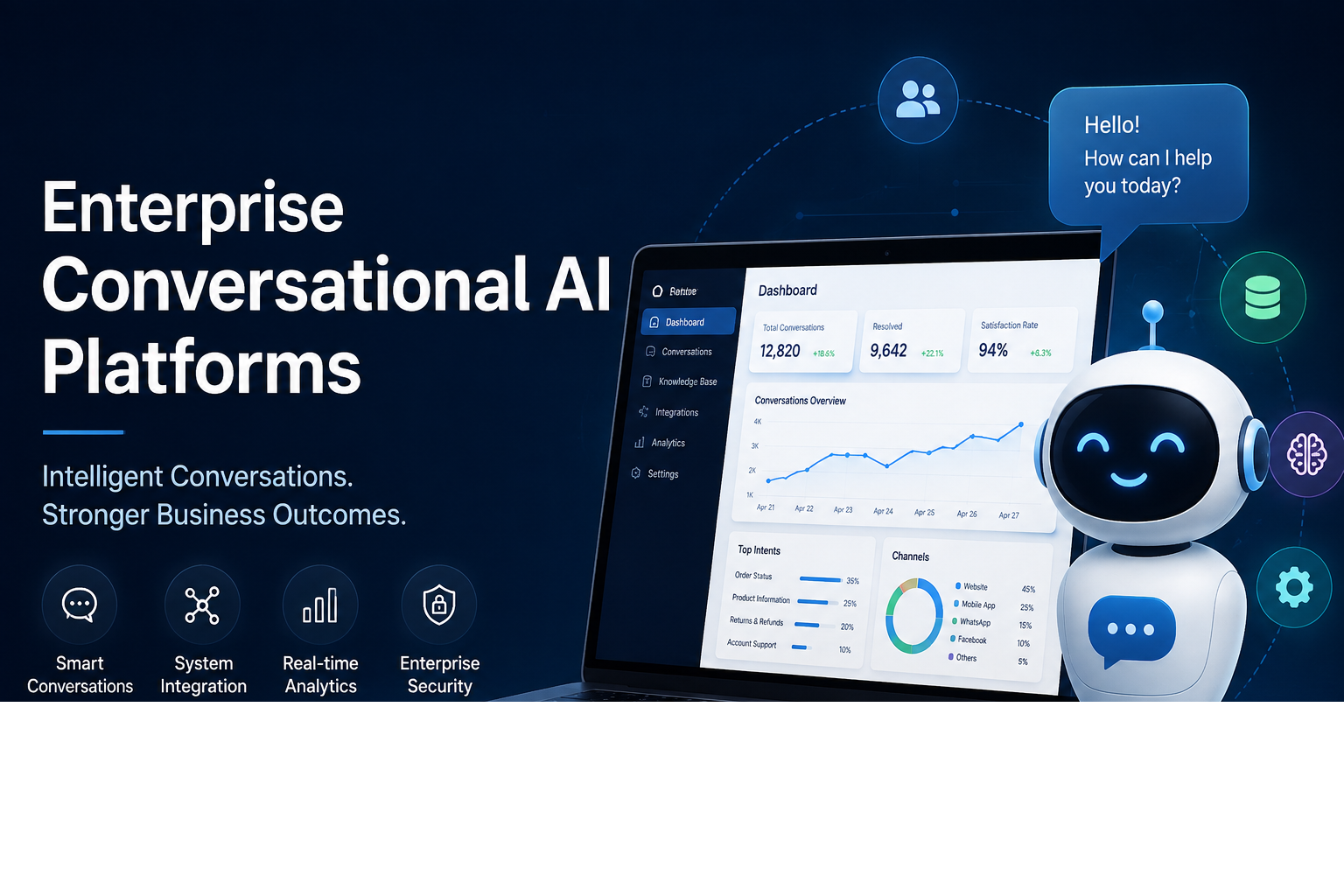
Businesses are increasingly using artificial intelligence to improve how they communicate with customers, employees, and partners. Enterprise Conversational AI Platforms provide organizations with tools to build intelligent virtual assistants, chatbots, and automated communication systems that can understand natural language and respond in a more useful way.
Unlike basic chatbots that rely on predefined answers, modern conversational AI can understand context, process different types of questions, and support more complex interactions. This makes it useful across customer service, sales, human resources, IT support, and other business functions.
What Are Enterprise Conversational AI Platforms?
Enterprise conversational AI platforms are software solutions designed to help large organizations create and manage AI-powered conversations.
These platforms can connect with business systems such as customer relationship management software, knowledge bases, help desks, and internal databases. This allows AI assistants to access relevant information and provide more personalized responses.
For example, a customer might ask about an order, while an employee could use an internal AI assistant to find company policies. The same underlying technology can support different business workflows.
Why Are Businesses Using Conversational AI?
Customer expectations have changed significantly. People increasingly expect quick answers and convenient digital communication. Businesses, meanwhile, need to handle large numbers of questions without continuously increasing support costs.
Conversational AI can help by providing assistance around the clock. It can answer common questions instantly and transfer more complicated issues to human employees when necessary.
This combination of automation and human support can create a more efficient customer experience.
Key Features
Natural Language Understanding
Modern platforms are designed to understand everyday language instead of requiring users to follow specific commands. This allows people to communicate with an AI assistant in a more natural way.
Integration With Business Systems
Enterprise AI becomes more useful when it can connect with existing business applications. Integrations with CRM, help desk, e-commerce, and knowledge management systems can allow assistants to provide information based on real business data.
Omnichannel Communication
Organizations may want to communicate with customers through websites, mobile applications, messaging services, or other digital channels. A strong platform can help manage conversations across multiple touchpoints.
Analytics and Monitoring
Businesses need to understand how AI assistants are performing. Analytics can reveal common questions, unsuccessful interactions, customer satisfaction trends, and areas where the system needs improvement.
Benefits for Enterprises
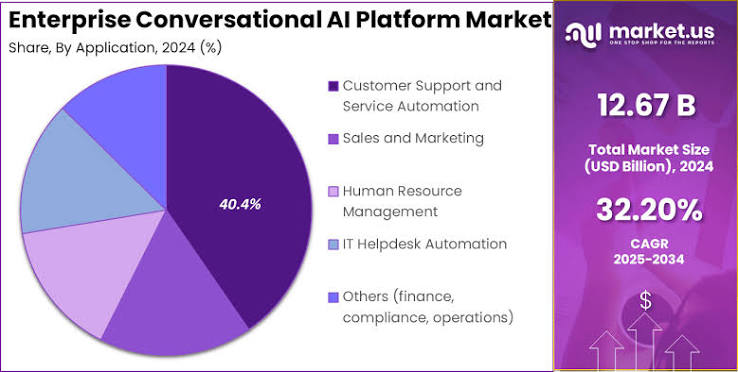
An AI assistant can handle many routine conversations simultaneously, helping businesses manage periods of high demand.
Conversational AI can also reduce repetitive work for employees. Instead of answering the same basic questions repeatedly, support teams can focus on complex problems that require human expertise.
Another benefit is consistency. AI assistants can follow defined business rules and provide standardized information across different customer interactions.
Common Business Applications
Enterprise conversational AI can be used in many departments.
Customer service: AI assistants can answer frequently asked questions, provide order information, and guide customers through basic support processes.
Sales: Conversational tools can qualify leads, answer product questions, and help potential customers find relevant information.
Human resources: Employees can use AI assistants to find information about benefits, policies, leave procedures, and internal processes.
IT support: AI can help employees troubleshoot common technical problems and locate solutions within an organization’s knowledge base.
Challenges to Consider
Despite its advantages, conversational AI requires careful planning. Organizations need to consider data security, privacy, system integration, response accuracy, and ongoing maintenance.
AI systems can also misunderstand questions or provide incorrect information. For this reason, businesses should establish appropriate monitoring and escalation processes.
Employee training is another important factor. Staff should understand when AI should handle a request and when a conversation should be transferred to a human specialist.
The Future of Enterprise Conversational AI
Conversational AI is moving toward more capable systems that can understand context, work with business data, and complete multi-step tasks.
As AI technology develops, enterprise assistants may become less focused on simply answering questions and more capable of helping users complete actions. This could make conversational interfaces an important part of everyday business operations.
Conclusion
Enterprise Conversational AI Platforms can help organizations improve communication, automate repetitive interactions, and provide faster access to information. From customer service and sales to HR and IT support, these platforms have applications across many areas of a business.
The most effective approach is not to replace human employees entirely. Instead, businesses can use conversational AI to handle routine interactions while allowing people to concentrate on complex tasks that require experience, judgment, and empathy.
FAQ
What are Enterprise Conversational AI Platforms?
Enterprise Conversational AI Platforms are software solutions that help businesses create AI-powered chatbots and virtual assistants for customer service, sales, HR, IT support, and other operations.
How does conversational AI help businesses?
It can automate routine questions, provide faster responses, reduce repetitive work, and help employees focus on more complex tasks.
Can enterprise conversational AI integrate with existing systems?
Yes. Many platforms can integrate with CRM systems, help desks, knowledge bases, and other business applications.
Is conversational AI useful for customer service?
Yes. It can answer common questions, provide basic support, guide customers through processes, and transfer complex issues to human agents.

Artificial intelligence has moved far beyond being a futuristic idea. In 2026, AI is becoming part of everyday work, business, education and technology across the United Kingdom. From AI assistants and automated software to advanced research systems, the technology is changing how people work and how companies operate.
The UK’s growing focus on artificial intelligence is also becoming an important economic story. The government announced a £1.1 billion AI hardware plan in June 2026, including major investment in computing power and a new national AI supercomputer.
Why is AI so important in 2026?
One of the biggest changes in 2026 is that AI is moving from experimentation into practical use.
Businesses are increasingly using AI to analyse information, automate repetitive tasks, improve customer service and support employees. Instead of simply asking an AI chatbot a question, companies are beginning to use more advanced systems capable of completing specific tasks with limited human intervention.
This shift is often described as agentic AI.
AI agents can be designed to plan actions, use software tools and complete multi-step workflows. UK Research and Innovation has identified agentic AI, explainable AI, edge computing and human-in-the-loop systems among areas where the UK could develop particular strengths.
AI and UK jobs
The impact of AI on employment remains one of the biggest questions surrounding the technology.
Some companies are using AI to make existing employees more productive, while others are automating tasks that were previously performed by people. This is creating both opportunities and concerns, particularly for workers entering professional careers.
The UK government has responded by investing in AI training. In August 2026, it announced AI boot camps aimed at unemployed or at-risk young people aged 16 to 21, with training covering AI tools, workplace skills and responsible use of the technology.
The goal is not simply to teach people how to use chatbots. It is to help young workers understand how AI can be applied in real workplaces.
The UK is investing heavily in AI infrastructure

Powerful AI systems require enormous amounts of computing capacity.
That is why AI infrastructure has become almost as important as the software itself. The UK’s June announcement included £750 million for a new national AI supercomputer, including funding for next-generation chips.
This investment reflects a wider concern about technological independence. Countries increasingly want access to their own computing infrastructure rather than relying completely on overseas technology providers.
For Britain, developing stronger AI infrastructure could help universities, startups and established companies compete internationally.
AI is becoming part of the UK economy
The economic impact of AI is already becoming visible.
Recent UK economic data highlighted strong growth in information and communications industries, with AI-associated sectors such as computer programming and consultancy recording significant increases in output. Reuters reported that AI-related industries grew by 3.7% in the second quarter of 2026.
This suggests that AI is no longer simply a technology-sector story. It is increasingly connected to the wider UK economy.
Companies in finance, healthcare, manufacturing, retail and professional services are all exploring ways to use AI.
What about AI regulation?
Rapid development has also increased pressure on governments to establish clearer rules.
The UK has generally favoured a principles-based and sector-specific approach rather than relying on one comprehensive AI law. The government has also indicated that it could consider stronger regulation if voluntary safeguards are not effective enough.
Important issues include safety, transparency, privacy, copyright and accountability.
As AI becomes capable of carrying out more complex tasks, questions about who is responsible when something goes wrong are likely to become increasingly important.
What could happen next?

The next stage of AI development could focus less on chatbots and more on systems that can actually perform tasks.
AI agents could help organise business processes, analyse documents, write software, conduct research and interact with other digital systems. At the same time, companies will need stronger cybersecurity and oversight to make sure automated systems behave as intended.
The UK’s technology sector is already attracting substantial investment. Recent reporting indicates that British AI startups raised billions of dollars during the first half of 2026, highlighting London’s continued importance as an AI hub.
Final Thoughts
AI technology in 2026 is becoming more practical, more powerful and more deeply connected to everyday life.
For the UK, the opportunity is significant. Government investment in computing infrastructure, growing startup activity and increasing business adoption could strengthen Britain’s position in the global AI race.
However, technology also brings challenges. Jobs, privacy, safety and regulation will remain important issues as AI becomes capable of handling increasingly complicated tasks.
One thing is already clear: AI is no longer just a technology trend. In 2026, it is becoming an important part of the UK’s economic and technological future.


Fleet management technology is changing rapidly in 2026.
Businesses are moving beyond basic GPS tracking and adopting smarter solutions that combine telematics, artificial intelligence, video safety, predictive maintenance, asset tracking, and electric vehicle management.
For fleet operators, the right technology can improve vehicle utilization, reduce downtime, increase driver safety, and make daily operations easier to manage.
With so many providers available, understanding the companies and technologies shaping the market can help businesses make better decisions.
Why Fleet Management Technology Matters in 2026
Modern fleet management is becoming more data-driven. According to Verizon Connect’s 2026 Fleet Technology Trends Report, 80% of surveyed fleet professionals use GPS fleet tracking, while video telematics adoption has reached 46%. The report also highlights growing interest in AI-powered insights and more automated fleet decision-making.
This shift means fleet software is no longer simply showing managers where vehicles are located. It is increasingly helping them understand why something is happening and what action should be taken next.
1. Geotab
Geotab is one of the major names in connected fleet technology. Its platform focuses on telematics, vehicle tracking, driver safety, maintenance, compliance, and fleet analytics.
In 2026, the company is emphasizing AI-powered telematics and agentic AI. Its technology is moving toward providing actionable recommendations instead of simply displaying information on a dashboard.
Geotab’s 2026 telematics outlook highlights predictive operations, intelligent connectivity, EV fleet management, cybersecurity, and AI-powered decision support as important developments.
This makes Geotab a strong option for businesses managing large or mixed vehicle fleets.
2. Ramsay
Ramsay has become another important provider in connected operations and fleet management. Its technology combines vehicle tracking, driver safety, cameras, equipment monitoring, and operational data.
One of the company’s key areas is AI-powered video telematics. These systems can identify risky driving behaviors and help fleet managers provide more targeted safety coaching.
For companies looking for a platform that connects fleet visibility with safety and operational management, Ramsay remains a provider worth watching in 2026.
3. Verizon Connect
Verizon Connect continues to be a major player in GPS fleet tracking, video telematics, asset tracking, and field service management.
Its 2026 research shows that fleet technology is increasingly being used to improve safety, productivity, maintenance, and cost control. The company also points toward AI data assistants, automated insights, and agentic AI as the next stage of fleet technology.
For businesses that want established tracking technology combined with newer AI capabilities, Verizon Connect is an important name in the market.
4. Motive
Motive focuses heavily on commercial transportation and trucking. Its fleet technology brings together areas such as vehicle tracking, driver safety, compliance, and operational management.
The wider fleet industry is moving toward integrated platforms rather than separate systems for every function. This trend makes providers such as Motive increasingly relevant for transportation companies that want their fleet data and daily operations connected.
5. Trimble
Trimble is another established technology provider with a strong presence in transportation and logistics.
Its solutions are particularly relevant for businesses that need technology connected to routing, transportation workflows, fleet operations, and broader logistics management.
As fleet technology becomes more integrated, the ability to connect vehicle information with other business systems is becoming increasingly important.
Key Fleet Technology Trends in 2026
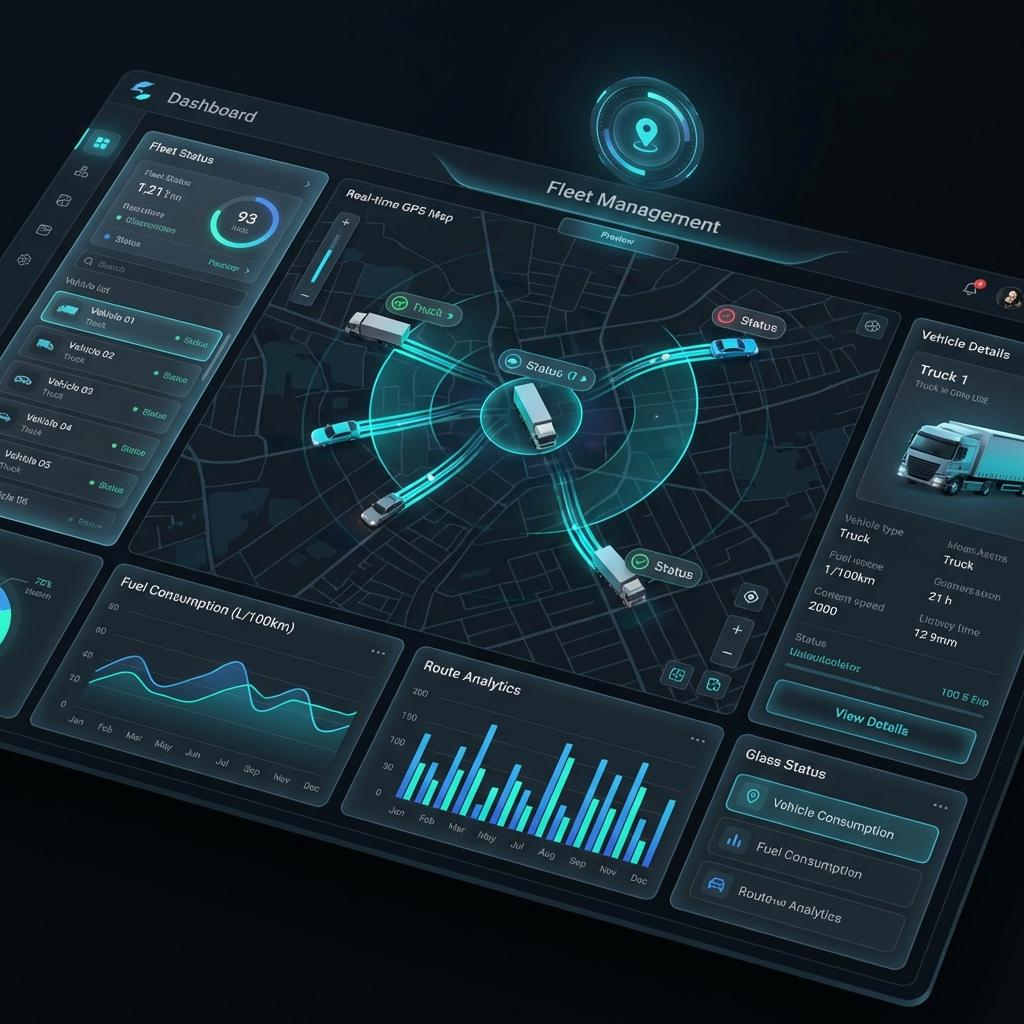
The biggest trend this year is the move from reactive fleet management to predictive fleet management.
Instead of waiting for a vehicle to break down, predictive maintenance uses vehicle data to identify potential problems earlier. This can help reduce unexpected downtime and improve vehicle availability.
AI is also becoming more useful for route optimization, driver safety, maintenance planning, and operational decision-making. Modern telematics platforms are increasingly designed to turn large amounts of vehicle data into practical recommendations.
Electric vehicles are another important consideration. Fleets adding EVs need systems that can monitor battery performance, charging, range, and utilization while also managing traditional vehicles in the same fleet.
How to Choose the Right Provider
The best fleet management technology provider depends on the company’s specific needs. Before choosing a platform, businesses should consider:
- Real-time GPS tracking
- AI-powered safety features
- Predictive maintenance
- Driver behavior monitoring
- Fuel and idle-time management
- EV and charging support
- Asset tracking
- Reporting and compliance
- Software integrations
- Data security and scalability
A provider should not be selected simply because it offers the largest number of features. The technology should solve real operational problems and provide measurable value.
Conclusion
Fleet management technology in 2026 is becoming smarter, more connected, and increasingly proactive. Companies such as Geotab, Ramsay, Verizon Connect, Motive, and Trimble are helping shape this transition.
The future of fleet management is not just about knowing where vehicles are. It is about using connected data and AI to improve safety, predict maintenance needs, reduce operating costs, and make better decisions.
For businesses planning their fleet strategy in 2026, investing in the right technology can provide more than better tracking—it can create a safer, more efficient, and future-ready fleet.
-

 Crypto3 weeks ago
Crypto Trading May Be Algorithmic in the Future, but Not Completely Autonomous
-

 Technology & AI3 months ago
Depomin82: Rethinking Digital Infrastructure for a Smarter Connected Future
-

 Fashion2 months ago
How to Build a Capsule Wardrobe on a UK Budget
-

 Business3 months ago
The Hidden Expenses in eCommerce Accounting: The Reasons Most UK Online Retailers Calculate Profit incorrectly
-

 Fashion2 months ago
Here are the Top 8 Luxury Clothing Brands in the UK for 2026
-

 Celebrity2 months ago
What is Tom Hardy’s Net Worth and Salary?
-

 Blog3 months ago
mmsbre: Reimagining Digital Connectivity in a Hyper-Intelligent World
-

 Celebrity3 months ago
Fred Dimbleby: ITV News’s Top Political Journalist and His Influence on UK Reportin