
Business
A Beginner’s Guide to Starting a Jersey Mike’s Franchise


The American fast-casual landscape is crowded, but few names carry the same weight as Jersey Mike’s. For an entrepreneur looking to pivot into the food industry, this brand represents more than just sandwiches; it represents a proven system of high-quality ingredients and fanatical customer loyalty. Let’s be honest for a moment, though. You do not simply “buy” a successful company.
It is constructed with capital, labor, and a very specific set of guidelines.
If you are a small business owner looking to diversify your portfolio, the Jersey Mike’s franchise model is a compelling choice. From a single storefront in Point Pleasant, New Jersey, the business has grown into a national powerhouse. However, there is a significant financial commitment and a steep learning curve involved in the process of signing a contract and cutting that first sub.
How Much Does a Jersey Mike’s Franchise Cost to Open?
You must exchange numbers before you can hang the sign. Every prospective owner must first overcome the financial obstacle. There is a wide range when determining the total cost of the Jersey Mike’s franchise. The total investment typically ranges from $185,903 to $1,417,592 depending on the location, footprint size, and local construction costs. This fee is currently approximately $18,500.
Even though that may appear insignificant in comparison to some of the world’s largest burger chains, keep in mind that this is only a ticket to the stadium. You still need to account for leasehold improvements, equipment like those high-end meat slicers, and initial inventory. Does your bank account have the stamina for this? The brand typically requires a net worth of at least $500,000, with at least $125,000 coming from liquid assets.
Your Step-by-Step Guide to the Grand Opening and Application Process
The real work begins once the finances are in order. A Jersey Mike’s franchise does not operate on a “pay-to-play” model in which anyone with a bank account can acquire a location. The corporate team is well-known for its selectiveness. Operators are what they want, not just investors. You will likely go through a rigorous interview process and a ‘Discovery Day’ where both parties decide if the chemistry is right.
Site selection becomes your obsession once you receive permission. The brand assists with real estate analytics, but the boots on the ground are yours. You need a spot with high visibility and heavy foot traffic. Then comes the training. Jersey Mike’s puts its owners through an intensive program that can last several weeks. Customers in Los Angeles and New York ought to have identical experiences.
Smart Business Financing To Cover Your Jersey Mike’s Franchise Fee
So, how will you pay for all of this? The majority of owners of small businesses do not have a million dollars lying around. This is where strategic small business funding comes into play. You need commercial capital of a professional level here, not personal financing. Many people take the Small Business Administration (SBA) route. Everything from the Jersey Mike’s franchise fee to your initial working capital can be covered by an SBA 7(a) funding program.
Additionally, getting the financing you need to start a franchise is made easier with franchise funding. These financing options have longer terms and competitive interest rates, which is great for your cash flow in the first few months as you get your bearings. Financing of equipment is another option. You can frequently use the equipment itself as collateral for a funding option because specific ovens, walk-in coolers, and Point of Sale systems are required for a Jersey Mike’s franchise.
Your other assets remain free as a result. Some owners also look into lines of credit to handle the ‘surprises’ that inevitably pop up during construction. Let’s face it: the construction phase always exceeds the initial estimate. Having a flexible funding partner can be the difference between opening on time or facing a month of expensive delays.
Managing The Daily Expenses and Royalties of Your New Franchise

The narrative does not begin until the doors are opened. Maintaining a Jersey Mike’s franchise requires a financial commitment. In addition, there is a marketing fee of approximately 5%. Why pay these charges? because you’re putting your money into a huge marketing machine. Your neighborhood store benefits from the brand’s national ads.
However, you must carefully control your food and labor costs. Your margins will disappear faster than a Giant Original Italian sub on a Friday afternoon if your “Cost of Goods Sold” creeps too high. Is the work difficult? Yes. Is there a lot of support for the brand? Absolutely.
Conclusion
There are no guarantees in franchising, but entrepreneurs who are willing to put in the work will find that a Jersey Mike’s franchise is one of the more stable options. By understanding the Jersey Mike’s franchise cost and preparing for the Jersey Mike’s franchise fee, you position yourself for a smoother launch. Despite the fierce competition in the sandwich industry, quality always finds a market. Your new store could become a local favorite with the right small business funding and a commitment to the brand’s culture. Check your credit, look at your numbers, and decide if you’re ready to follow “Mike’s Way.”

E-commerce has changed the way businesses sell products and how customers receive them. As online shopping continues to grow, packaging has become an essential part of the buying journey rather than simply a way to protect products.
Every order must be packed carefully enough to survive storage, transportation, and delivery while remaining practical and affordable for businesses. This growing demand is encouraging the packaging industry to develop smarter and more efficient solutions. From sustainable packaging and recyclable materials to shipping boxes and customised designs, brands are rethinking how products reach consumers.
At the same time, modern online shopping expectations are pushing companies toward packaging that combines protection, convenience, sustainability, and a better customer experience.
The Rise of Packaging Designed for Shipping
Traditional retail packaging was mainly designed to look attractive on a store shelf. E-commerce packaging has a different job. A parcel may pass through warehouses, delivery vehicles, sorting centres, and multiple handling points before reaching the customer.
This has increased demand for packaging that provides strong protection without adding unnecessary weight or size. Companies are increasingly using durable cardboard boxes, protective inserts, padded mailers, and custom-fit packaging to reduce product damage during transportation.
At the same time, businesses are trying to avoid oversized boxes. A package that is much larger than the product takes up more space in delivery vehicles and warehouses. Right-sized packaging can therefore help companies improve logistics efficiency while reducing material consumption.
Sustainability Is Becoming a Major Priority
One of the biggest changes created by e-commerce is the growing focus on sustainable packaging. Online shopping can generate significant amounts of cardboard, plastic, protective materials, and other packaging waste. Consumers are becoming more conscious of this problem and increasingly expect brands to take responsibility.
This has encouraged businesses to explore recyclable, reusable, compostable, and biodegradable materials. Recycled cardboard and paper-based packaging are becoming popular alternatives in many industries. Some companies are also reducing plastic components and replacing unnecessary layers of packaging.
However, sustainability is not simply about replacing one material with another. Brands are also examining the entire packaging process, including manufacturing, transportation, storage, and disposal. The goal is to create packaging that provides protection while using fewer resources.
Packaging Has Become Part of the Customer Experience

In e-commerce, packaging can also act as a physical connection between a customer and an online brand. Since shoppers cannot see the product on a store shelf before buying it, the delivery experience can influence how they perceive the company.
This has led to the popularity of attractive branded boxes, personalised messages, creative opening experiences, and carefully arranged products. For premium brands, packaging can help communicate quality and exclusivity.
Even smaller online businesses can use packaging to strengthen their identity. A distinctive box, printed tissue paper, or simple thank-you card can make an order feel more personal. Customers may also share interesting packaging experiences on social media, giving brands additional exposure.
Smart Packaging Is Gaining Attention
Technology is another factor influencing the packaging industry. Smart packaging can include QR codes, tracking features, digital product information, authentication systems, and interactive elements.
For example, a QR code on a package can take customers directly to product instructions, warranty information, recycling guidance, or a brand’s website. In some industries, technology can also help companies monitor products during transportation.
These developments are particularly useful for businesses selling expensive, sensitive, or specialised products. As e-commerce becomes increasingly digital, packaging is also becoming more connected to the digital customer journey.
Returns Are Changing Packaging Design
Returns are a major part of online shopping, especially in fashion, electronics, and other consumer categories. This has created another challenge for packaging manufacturers.
Packaging now needs to protect products not only during the original delivery but potentially during a return journey as well. Easy-open and resealable designs can make the process simpler for customers while reducing the need for additional packaging.
Reusable packaging systems are also receiving greater attention. Instead of treating a box or mailer as something that is used once and discarded, businesses can design packaging that can be used multiple times.
Automation Is Reshaping Packaging Operations

The growth of online orders has also encouraged warehouses to become more automated. Packaging equipment can measure products, select suitable box sizes, apply labels, and prepare orders at high speed.
Automation allows businesses to process large numbers of orders while maintaining consistency. It can also reduce packaging errors and help companies control material usage.
For large e-commerce operations, efficient packaging is closely connected to delivery speed. The faster an order can move from warehouse shelves to a shipping vehicle, the easier it becomes for businesses to meet customer expectations.
The Future of E-commerce Packaging
The relationship between e-commerce and packaging will continue to evolve. Future packaging is likely to focus on three major areas: efficiency, sustainability, and experience.
Companies will look for ways to use fewer materials without compromising product protection. Packaging may become more reusable and easier to recycle. At the same time, digital technology could make packages more interactive and useful.
The biggest change is that packaging is no longer viewed simply as a container. In the e-commerce economy, it is part of logistics, branding, sustainability, customer service, and product protection.
Ultimately, the growth of online shopping is pushing the packaging industry to become more innovative. Businesses that can combine practical protection with sustainable materials and memorable customer experiences will be better positioned to meet the expectations of the modern e-commerce market.
FAQs
1. How is e-commerce changing the packaging industry?
E-commerce is increasing demand for lightweight, durable, sustainable, and easy-to-handle packaging that can protect products throughout the delivery process.
2. Why is sustainable packaging important for e-commerce?
Sustainable packaging helps businesses reduce waste, lower material consumption, and meet growing consumer expectations for environmentally responsible products.
3. What type of packaging is commonly used for e-commerce?
Common options include cardboard boxes, padded mailers, paper-based packaging, protective inserts, and custom-sized shipping containers.
4. How does packaging affect the customer experience?
Well-designed packaging can make products feel more premium, protect them from damage, and create a positive first impression when customers receive their orders.
5. Will e-commerce packaging become more eco-friendly?
Yes. As businesses and consumers focus more on reducing waste, the industry is expected to adopt more recyclable, reusable, and resource-efficient packaging solutions.
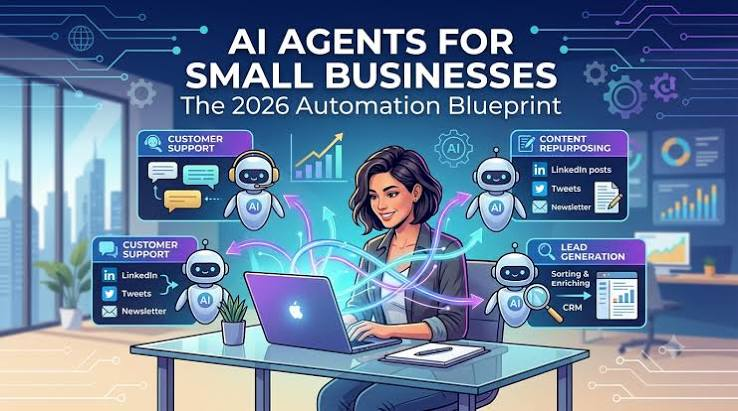
Artificial intelligence is becoming more useful for small businesses in 2026. While many companies started with simple AI chatbots and content-generation tools, the next development is AI agents—systems designed to handle tasks, use digital tools and work towards a specific goal.
For small businesses, this could be particularly important because AI agents may help reduce repetitive work without requiring a large team. The UK Competition and Markets Authority says agentic AI can potentially plan, coordinate and take actions across different services, although many current implementations remain limited and operate with human oversight.
What are AI agents?
An AI agent is a software system that can take a goal and work through several steps to achieve it.
A traditional chatbot might answer a customer’s question and leave the business owner to complete the next step.
The difference is action.
They can potentially interact with websites, databases, business software and other digital tools to complete parts of a workflow. The UK’s AI Security Institute has found a growing ecosystem of agent tools capable of actions such as browsing websites, executing code and interacting with external systems.
Why are AI agents important for small businesses?
Small businesses often have limited time and staff.
An owner might spend hours every week answering similar emails, organising appointments, checking enquiries, updating spreadsheets or following up with customers.
These tasks may not require complex human judgement, but they can still take valuable time.
An AI agent could potentially handle parts of these repetitive workflows while allowing employees to focus on customers, strategy and other work that requires human involvement.
The UK government is actively encouraging businesses to move beyond basic AI use and explore ways technology can transform workflows, products and business models.
How could a small business use an AI agent?
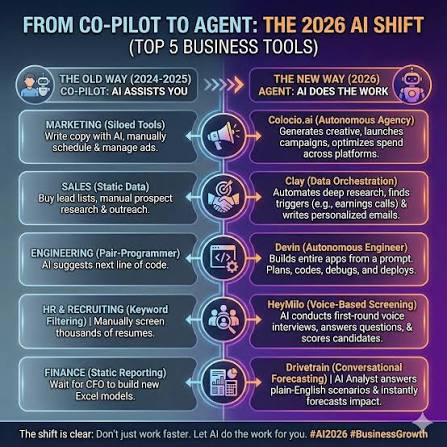
There are several practical possibilities.
Customer service
An AI agent could answer common customer questions, search a company’s approved information and escalate unusual cases to a human employee.
Appointment management
For businesses that rely on appointments, an AI system could potentially help manage enquiries, check availability and organise bookings.
Lead follow-up
An agent could identify new enquiries, collect basic information and send an appropriate follow-up message before passing the lead to a member of staff.
Document processing
Businesses receive invoices, forms, orders and other documents every day. AI agents can potentially extract information and transfer it into other systems, reducing manual data entry.
Internal administration
An agent could help organise information, create reports or coordinate repetitive tasks across different software platforms.
These examples are most suitable when the workflow is clearly defined and the business can monitor what the system is doing.
AI agents are not the same as AI chatbots
The terms are sometimes used interchangeably, but there is an important difference.
A chatbot generally responds to a user’s prompt. An AI agent is designed to pursue a goal through multiple steps.
For example:
Chatbot: “Here is a draft reply to your customer.”
AI agent: “I checked the customer record, reviewed the relevant information, prepared the response and sent it according to the approved workflow.”
The second example involves multiple actions rather than simply generating an answer.
However, not every product marketed as an “AI agent” is fully autonomous. The CMA notes that current consumer-facing implementations are generally bounded, with human escalation still common.
What are the risks for small businesses?
AI agents can create new risks because they may have access to business systems and information.
An incorrect decision that stays inside a chatbot conversation may be relatively easy to correct. An incorrect action taken by an AI agent could potentially affect a customer, order, payment or business record.
That is why businesses need clear permissions, monitoring and human oversight.
The UK’s National Cyber Security Centre recommends understanding dependencies, monitoring agent behaviour, threat-modelling deployments and preparing for failures or misuse. It also recommends starting small and building security and governance into the deployment from the beginning.
Businesses also remain responsible for complying with consumer protection law when using AI agents. The CMA specifically advises companies to tell customers when they use an AI agent, train the system appropriately and monitor its performance.
Should every small business use AI agents in 2026?
No.
The best starting point is not to automate everything. Instead, businesses should identify one repetitive, low-risk task where automation could genuinely save time.
For example, a company could begin with handling frequently asked questions or organising internal documents. Once the workflow works reliably, it may be possible to expand into more complicated processes.
This approach is safer and more practical than giving an AI system unrestricted access to important business operations.
What is the future of AI agents?
AI agents are likely to become more common as businesses become more comfortable connecting AI systems with their existing software.
The UK is already treating agentic AI as an important part of its technology landscape. Government research highlights potential benefits including productivity improvements, while also recognising concerns around transparency, accountability, security and consumer protection.
For small businesses, the biggest opportunity may not be replacing employees. It could be giving a small team the ability to accomplish more with the same amount of time.
Final Thoughts
AI agents for small businesses in 2026 represent an important change in how companies can use artificial intelligence.
Instead of simply asking AI to create an answer, businesses can increasingly explore systems that help complete multi-step tasks. Customer service, administration, lead management and document processing are among the areas where this technology could provide practical benefits.
But successful adoption requires caution. Businesses should start with simple workflows, limit permissions, monitor performance and keep humans involved when decisions have significant consequences.
The future of AI for small businesses may therefore be less about replacing people and more about giving people smarter digital assistance to get everyday work done.


Document Management Organizations generate and manage vast amounts of data on a daily basis in the fast-paced corporate world of today. Documents are at the core of nearly every operation, including contracts, invoices, reports, presentations, customer information, and internal communications.
For this reason, more intelligent document management is now a crucial component of contemporary corporate operations. Teams can organize files, enhance collaboration, safeguard sensitive data, and streamline daily workflows with the aid of a well-designed document management system.
What Is Document Management?
The process of creating, storing, organizing, accessing, sharing, and preserving digital documents in an organized setting is known as document management.
Conventional document storage frequently uses various online services, email attachments, physical filing cabinets, and folders dispersed across individual computers. As a business expands, these techniques may become challenging to administer, even though they could be effective for little amounts of data.
A more intelligent approach to document management organizes crucial files so that staff members may swiftly and safely locate the information they require.
Why Efficient Document Management Matters

Poor document organization can create more problems than simply wasting time. Employees may accidentally work on outdated files, duplicate documents, send confidential information to the wrong person, or lose important records.
A smarter system can help businesses:
- Reduce time spent searching for files
- Improve team collaboration
- Minimize duplicate documents
- Maintain consistent file versions
- Strengthen information security
- Simplify document approval processes
- Improve productivity
- Support compliance and record-keeping
When employees can access accurate information without unnecessary delays, the entire workflow becomes more efficient.
Centralize Your Documents
Establishing a central location for corporate files is one of the easiest methods to enhance document management.
Organizations can create an organized digital repository in place of dispersing papers among personal computers, email inboxes, USB devices, and other storage platforms.
Departments, projects, clients, document kinds, and business functions can all be used to arrange documents.
Make Documents Easy to Find
Only when workers can easily find what they need can a document management system be beneficial.The ability to search can have a significant impact. Users can search by file name, keywords, document type, date, author, project, or other metadata using contemporary systems.
For instance, an employe might search for the customer name or contract number to quickly find the pertinent document rather than manually going thru dozens of folders for a certain contract.This can save a lot of time, especially for businesses that handle thousands of files.
Improve Version Control
Another crucial component of more intelligent document management is version control.Imagine a group of people working on a significant idea. While earlier versions are still accessible when needed, employees can recognize the most recent version.This lowers the possibility of inadvertently changing or disseminating an out-of-date document.
Simplify Collaboration
Employees of modern companies frequently work from multiple locations, cities, or nations. By enabling authorized users to access shared files from the proper devices and locations, document management systems can facilitate collaboration.
Without continuously exchanging attachments via email, teams may work together on documents.
Employees can work in a regulated environment where updates and modifications are easy to handle rather than exchanging different versions.
Project teams, remote workers, outside partners, and departments that regularly exchange information may find this very helpful.
Automate Repetitive Workflows

Smarter document management goes beyond storage. Automation can help reduce repetitive administrative tasks.
For example, businesses can create workflows for:
- Document approvals
- Contract reviews
- Invoice processing
- Employee onboarding
- Purchase requests
- Compliance checks
- Records retention
Instead of manually sending every document to the next person, automated workflows can notify the appropriate employee when an action is required.
This helps reduce delays and allows employees to spend more time on higher-value activities.
Protect Sensitive Information
Confidential information is frequently found in business papers, such as financial records, contracts, employee data, customer information, and intellectual property.
Thus, a key component of document management should be security.
Features including role-based access restrictions, encryption, audit trails, safe backups, authentication, and suitable retention rules should be taken into account by organizations.
Only the documents required for their duties should be accessible to employes. Reducing needless access lessens the possible consequences of unintentional or unapproved disclosure.
Reduce Dependence on Paper
Businesses can also become more efficient by switching from paper documents to digital operations.
Physical storage, manual filing, printing, copying, and upkeep are all necessary for paper documents. They may also be lost or destroyed.
Digital document management can lower the amount of paper used while facilitating the search, sharing, and backup of information.
Digitizing document workflows can be a useful step toward more sustainable operations for companies looking to cut operational waste.
Choose the Right Document Management Solution
Every organization has different requirements, so there is no single document management solution that works for everyone.
Before choosing a system, consider:
- Number of users
- Amount of storage required
- Security requirements
- Collaboration needs
- Integration with existing software
- Automation capabilities
- Search functionality
- Mobile accessibility
- Backup and recovery options
- Scalability
- Cost
The best solution should support your existing workflow rather than making everyday tasks unnecessarily complicated.
Train Your Team
Technology alone cannot solve document management problems. Employees need to understand how the system should be used.
Create clear guidelines for naming files, organizing folders, assigning permissions, updating documents, and handling confidential information.
Training should be practical and easy to understand. Employees are more likely to follow a new process when they understand how it saves them time and makes their work easier.
Keep Improving Your Workflow
Document management should not be considered a one-time project. As your business grows, your information needs will change.
Regularly review your folder structures, permissions, workflows, retention policies, and storage requirements. Identify bottlenecks and ask employees where they are still losing time.
Small improvements can have a significant impact when repeated across an entire organization.
Final Thoughts
Smarter document management can transform the way businesses handle information. By centralizing files, improving search, controlling document versions, simplifying collaboration, automating repetitive processes, and strengthening security, organizations can create faster and more reliable workflows.
The goal is not simply to store documents digitally. It is to make information easier to access, manage, protect, and use.
As businesses continue to rely on digital information, an effective document management strategy can become an important foundation for productivity and long-term growth. When the right technology is combined with clear processes and employee training, teams can spend less time managing files and more time getting meaningful work done.
-

 Technology & AI3 months ago
Depomin82: Rethinking Digital Infrastructure for a Smarter Connected Future
-

 Crypto2 weeks ago
Crypto Trading May Be Algorithmic in the Future, but Not Completely Autonomous
-

 Fashion2 months ago
How to Build a Capsule Wardrobe on a UK Budget
-

 Business3 months ago
The Hidden Expenses in eCommerce Accounting: The Reasons Most UK Online Retailers Calculate Profit incorrectly
-

 Celebrity2 months ago
What is Tom Hardy’s Net Worth and Salary?
-

 Fashion2 months ago
Here are the Top 8 Luxury Clothing Brands in the UK for 2026
-

 Celebrity3 months ago
Fred Dimbleby: ITV News’s Top Political Journalist and His Influence on UK Reportin
-

 Blog3 months ago
mmsbre: Reimagining Digital Connectivity in a Hyper-Intelligent World